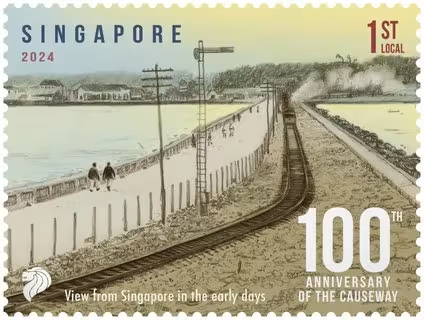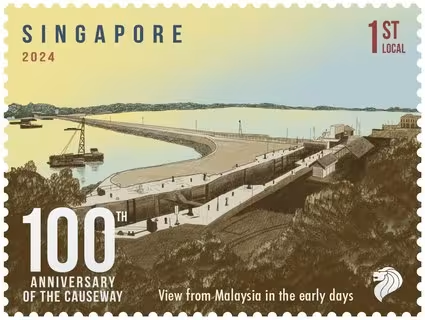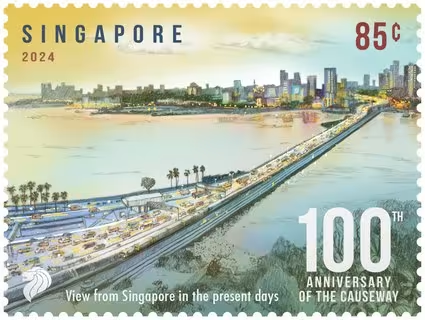
Overview
While the ties between Singapore and Malaysia stretch back centuries, the most significant institutional link between us celebrates its 100th year in 2024. The Causeway—known as one of the busiest border crossings in the world—is an enduring symbol of our shared history, bridging Singapore and Johor Bahru, capital of Malaysia's southernmost state.
The Centennial anniversary of the Causeway stamp issue commemorates its significant milestone in 2024.
Creating a connection The 19th century saw boom times for Malaya's plantations and mines. Coupled with the rapid rise of the colonial entrepôt in Singapore, the prosperous trade led to such volumes of goods and people crossing the Tebrau Straits that by the 20th century, ferry services were strained beyond capacity. A causeway was the timely solution and, in 1919, work began to span the 1.05km between the shores. Rubble from the Pulau Ubin and Bukit Timah quarries supplied 2,000 workers with material to build the 18.28 m-wide passage. It was to be a massive undertaking, an engineering feat. Construction continued through two years of a subsequent economic depression despite a 17 million Straits dollar price tag, and in June 1924, the Causeway was officially opened. It boasted railway tracks, wide roads for increasingly-popular motor vehicles and a pipeline carrying water.
The Causeway survived war-time damage and up till 1998 when the Tuas Second Link was opened, was our only land connection with our neighbour. Reflecting the growth in the two countries' relationship over the years, the crossing has been widened three times, in 1964, 1976 and 1989-91.
A sustained alliance Today, some 350,000 people make use of it daily, with a non-stop stream of traffic flowing through the Woodlands Checkpoint and the Sultan Iskandar Customs, Immigration and Quarantine station at Bukit Chagar. It is evidence of the strong friendship between Singapore and Malaysia, one that promises to persist for years to come.