Singapore POST

Ferns

Issue date 26 Feb 2014

Overview

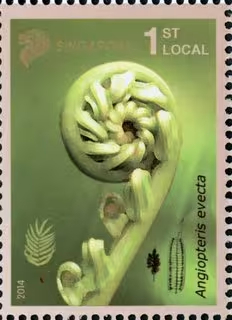
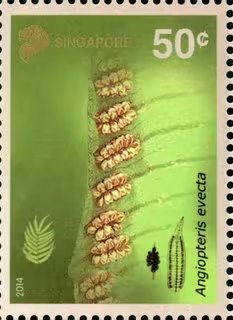
Angiopteris evecta, commonly known as Elephant Fern, is a large fern with a massive mound of a stem. Fronds are large, bipinnate compound and up to 6 metres long. The base of the frond stalk is swollen and has a pair of fleshy, rounded auricles. This fern is widely distributed in the Old World tropics from Madagascar and tropical Asia, throughout South-east Asia to Australia and Polynesia. In Singapore it can be found at Bukit Timah Nature Reserve, Labrador Nature Reserve, Bukit Batok Nature Park and Singapore Botanic Gardens.

Angiopteris evecta is found in primary and secondary forests, usually by streams and rivers. It can be grown in well-drained moist sites in the garden with some shade.

The plant has been used in folk medicine to treat rheumatism, to arrest bleeding after a miscarriage and to treat coughs. The young shoots can be eaten as a vegetable.

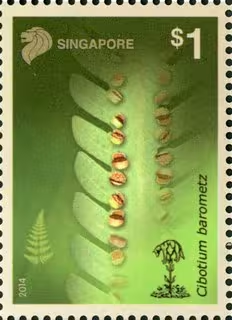
Cibotium barometz

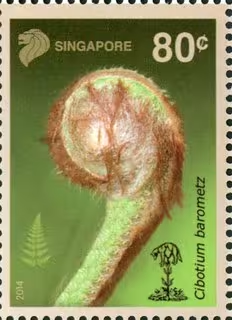
Cibotium barometz is also known as the Golden Chicken Fern. Although many species are tree ferns, this species does not develop a trunk. Fronds are large, bipinnate compound, borne on long, brown-black stalks that reach 3m long. The lower portions of these stalks are covered with masses of golden hairs. The apical portion, including the young fiddle-heads, is similarly covered with such hairs. These portions are sometimes sold placed in potted soil as table ornaments or as charms to ward off evil.

In folk medicine, these scales were once used to arrest bleeding.

The medieval legend of the Tartarian or Scythian Lamb originated from this fern. Rhizome pieces, each attached to four short basal portions of frond stalks, look like lambs when inverted. It was believed the lamb grew on a stalk like a plant, devouring other plants around it.

The fern is a tropical and subtropical species distributed from Assam to Southern China and Southeast Asia. It is commonly found at altitudes of 200-1500 m where the forest is shady and damp, as in Malaysia's Fraser's Hill and Cameron Highlands.
Ferns
Ferns
Ferns
Ferns
Technical specifications
Denomination1st Local, 50¢, 80¢, $1
Stamp Size29.85mm x 40.8mm
Self-adhesive Stamp Booklet Size70mm x 90mm (closed)
Perforation13.0
Paperunwatermarked
PrintingOffset Lithography
Sheet Content10 stamps per gummed-back and self-adhesive sheet
PrinterSecura Singapore Pte Ltd
Graphic DesignerLaw Pei Ti
Singapore POST
Singapore POST
Singapore POST
Singapore POST

Ferns

Issue date 26 Feb 2014

Angiopteris evecta, commonly known as Elephant Fern, is a large fern with a massive mound of a stem. Fronds are large, bipinnate compound and up to 6 metres long. The base of the frond stalk is swollen and has a pair of fleshy, rounded auricles. This fern is widely distributed in the Old World tropics from Madagascar and tropical Asia, throughout South-east Asia to Australia and Polynesia. In Singapore it can be found at Bukit Timah Nature Reserve, Labrador Nature Reserve, Bukit Batok Nature Park and Singapore Botanic Gardens.

Angiopteris evecta is found in primary and secondary forests, usually by streams and rivers. It can be grown in well-drained moist sites in the garden with some shade.

The plant has been used in folk medicine to treat rheumatism, to arrest bleeding after a miscarriage and to treat coughs. The young shoots can be eaten as a vegetable.

Cibotium barometz

Cibotium barometz is also known as the Golden Chicken Fern. Although many species are tree ferns, this species does not develop a trunk. Fronds are large, bipinnate compound, borne on long, brown-black stalks that reach 3m long. The lower portions of these stalks are covered with masses of golden hairs. The apical portion, including the young fiddle-heads, is similarly covered with such hairs. These portions are sometimes sold placed in potted soil as table ornaments or as charms to ward off evil.

In folk medicine, these scales were once used to arrest bleeding.

The medieval legend of the Tartarian or Scythian Lamb originated from this fern. Rhizome pieces, each attached to four short basal portions of frond stalks, look like lambs when inverted. It was believed the lamb grew on a stalk like a plant, devouring other plants around it.

The fern is a tropical and subtropical species distributed from Assam to Southern China and Southeast Asia. It is commonly found at altitudes of 200-1500 m where the forest is shady and damp, as in Malaysia's Fraser's Hill and Cameron Highlands.
Denomination

1st Local, 50¢, 80¢, $1

Stamp Size

29.85mm x 40.8mm

Self-adhesive Stamp Booklet Size

70mm x 90mm (closed)

Perforation

13.0

Paper

unwatermarked

Printing

Offset Lithography

Sheet Content

10 stamps per gummed-back and self-adhesive sheet

Printer

Secura Singapore Pte Ltd

Graphic Designer

Law Pei Ti

Ferns

Issue date 26 Feb 2014

FernsFernsFernsFerns

Overview

Angiopteris evecta, commonly known as Elephant Fern, is a large fern with a massive mound of a stem. Fronds are large, bipinnate compound and up to 6 metres long. The base of the frond stalk is swollen and has a pair of fleshy, rounded auricles. This fern is widely distributed in the Old World tropics from Madagascar and tropical Asia, throughout South-east Asia to Australia and Polynesia. In Singapore it can be found at Bukit Timah Nature Reserve, Labrador Nature Reserve, Bukit Batok Nature Park and Singapore Botanic Gardens.

Angiopteris evecta is found in primary and secondary forests, usually by streams and rivers. It can be grown in well-drained moist sites in the garden with some shade.

The plant has been used in folk medicine to treat rheumatism, to arrest bleeding after a miscarriage and to treat coughs. The young shoots can be eaten as a vegetable.

Cibotium barometz

Cibotium barometz is also known as the Golden Chicken Fern. Although many species are tree ferns, this species does not develop a trunk. Fronds are large, bipinnate compound, borne on long, brown-black stalks that reach 3m long. The lower portions of these stalks are covered with masses of golden hairs. The apical portion, including the young fiddle-heads, is similarly covered with such hairs. These portions are sometimes sold placed in potted soil as table ornaments or as charms to ward off evil.

In folk medicine, these scales were once used to arrest bleeding.

The medieval legend of the Tartarian or Scythian Lamb originated from this fern. Rhizome pieces, each attached to four short basal portions of frond stalks, look like lambs when inverted. It was believed the lamb grew on a stalk like a plant, devouring other plants around it.

The fern is a tropical and subtropical species distributed from Assam to Southern China and Southeast Asia. It is commonly found at altitudes of 200-1500 m where the forest is shady and damp, as in Malaysia's Fraser's Hill and Cameron Highlands.
Technical specifications

Denomination1st Local, 50¢, 80¢, $1
Stamp Size29.85mm x 40.8mm
Self-adhesive Stamp Booklet Size70mm x 90mm (closed)
Perforation13.0
Paperunwatermarked
PrintingOffset Lithography
Sheet Content10 stamps per gummed-back and self-adhesive sheet
PrinterSecura Singapore Pte Ltd
Graphic DesignerLaw Pei Ti
Subscribe to newsletter

Stay updated

Subscribe to our newsletter for the latest stamp releases, behind-the-scenes features, and exclusive stories from the vibrant world of philately.