Overview
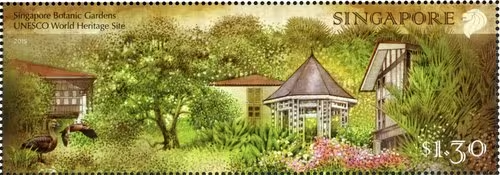
Singapore Botanic Gardens crowned UNESCO World Heritage Site
Founded in 1859, the Singapore Botanic Gardens (SBG) played an important role in fostering agricultural development in the region through collecting, growing, experimenting and distributing potentially useful plants. One of the most important successes was the introduction, experimentation and promotion of Hevea brasiliensis (Pará Rubber ). This became a major crop that transformed the region.
The Gardens also spearheaded new techniques in raising orchids in asceptic media, and founded a regional orchid breeding industry.
Since its establishment, SBG has continued to be a leading centre for plant science, research and conservation in Southeast Asia. Today, it is internationally recognised as an important reference centre for research on the region's flora for botanists around the world.
An integral part of Singapore's social and cultural heritage, SBG is a much-loved civic space, welcoming over four million visits annually. It continues to be the "people's garden", where personal milestones are celebrated, and where memories are created and cherished.