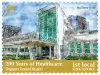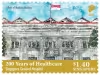
Overview
The story of Medicine in Singapore begins with the nation's flagship hospital, Singapore General Hospital (SGH), with a rich history tracing back to 1821. Singapore's first hospital started life in a shed, caring for British soldiers in a cantonment, but evolved to take care of the community. Today, Singapore has built a healthcare system known internationally for its excellence and for serving its people regardless of their station in life. In 2021, SGH celebrates its bicentennial, which also marks 200 years of Healthcare in Singapore.
SGH has come a long way with the nation, caring for generations of Singaporeans in good and tough times. The medical conditions treated by the hospital reflected the country's development and the population's changing healthcare needs. In the early years, diseases associated with malnutrition and poor living conditions were prevalent, such as beriberi in the 1890s, and the Spanish flu outbreak in 1918. After World War II, as Singapore industrialised, SGH treated the mass casualties from Singapore's worst industrial accident - the explosion onboard Greek oil tanker Spyros in 1978. With economic development, the main healthcare need became chronic diseases and care for a rapidly ageing population. And in 2020, Singapore was not spared when the Covid-19 pandemic hit. Throughout the ages, SGH was there to journey alongside Singapore.
SGH is also the fount of the nation's healthcare system - seat of Singapore's first medical school which trained generations of healthcare professionals who serve in institutions throughout Singapore.
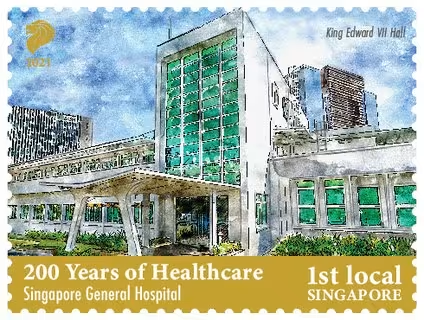
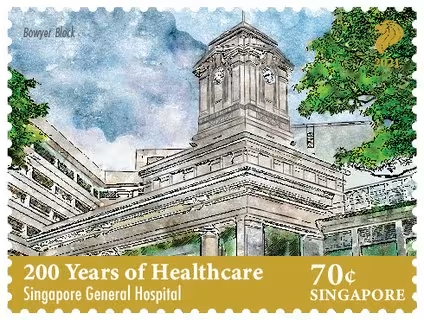
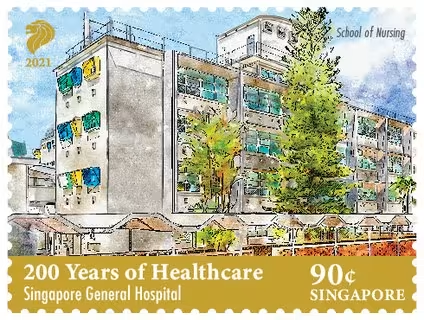
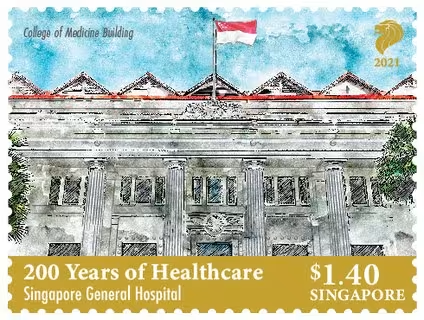
This series of commemorative stamps with the iconic medical buildings on SGH Campus celebrates the attributes of our healthcare professionals - Purpose, Passion, Courage and Grit. It salutes their unwavering dedication and contributions in building a healthcare system that Singapore is proud of and can rely on for excellent and compassionate care that truly matters.