Singapore POST

Art Series - Paintings of Chinatown Singapore

Issue date 17 May 1989

Overview

This set of stamps comprising 10¢, 35¢, 75¢ and $1, features paintings of Chinatown Singapore.

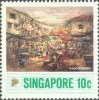
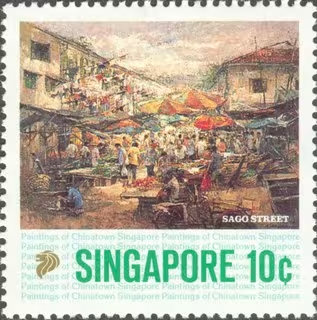
10¢ - SAGO STREET

Sago is a kind of starch extracted from the trunk of sago palm which grows in tropical regions. It is used as food, for example in puddings. It is believed that there were sago factories in the area in the past, thus the name of the street.

Both Sago Street and Smith Street formed the social and entertainment centre of Chinatown during the pre-war period.

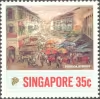
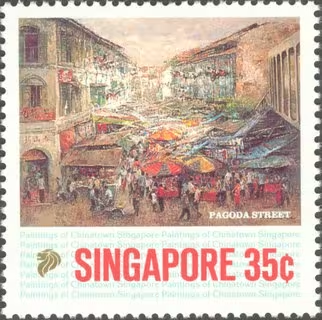
35¢ - PAGODA STREET

The naming of this street was related to the Sri Mariamman Temple. The Chinese used to call it "Kwong Hup Yuen Kai (Street)" as it used to house the Chinese coolie depot called Kwong Hup Yuen. Most of the buildings (usually three-storeyed) as seen in the picture were rebuilt at the turn of the century and have remained intact to the present day. In the day, the street, together with others in the vicinity, used to be the market place of Chinatown. At dawn, stalls selling embroidery ware and textiles created a different atmosphere from the fresh groceries stalls of the day. Nowadays, the shophouses that have remained deal mostly in textiles and tailoring.

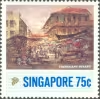
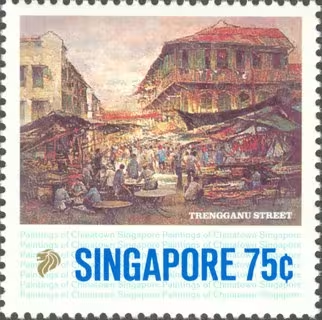
75¢ - TRENGGANU STREET

Also known as Hei Yuen Wang Kai (side street of Theatre Street) as it lies by the side of Smith Street (commonly known as Theatre Street) which housed the Lai Chuen Yuen opera theatre. Before the resettlement of hawkers at the Chinatown Complex, the street would be bustling with activity every morning as maid servants and housewives patronized stalls which sold vegetables, meat, food and other daily provisions.

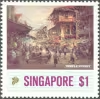
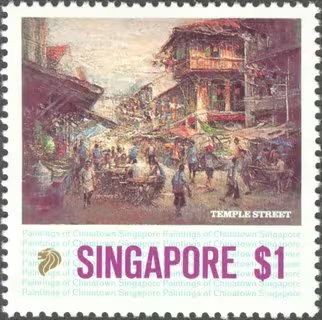
$1 - TEMPLE STREET

Looking rather like bunting, the clothes hanging out to dry on bamboo poles decorate both sides of Temple Street as seen from its junction with Trengganu Street. The local residents used to call it "Hei Yuen Hau Kai" (back street of Theatre Street). Activities filled the street day and night with stalls selling cooked food and daily provisions and chinaware, cloaks and blacksmith shops lining both sides of the street.
Art Series - Paintings of Chinatown Singapore
Technical specifications
Denomination10¢, 35¢, 75¢, $1
Stamp Size34.7mm x 34.7mm
Perforation14¼
PrintingLithography
Sheet Content50 stamps per sheet
PrinterQuesta
Graphic DesignerChoo Keng Kwang
Singapore POST
Singapore POST
Singapore POST
Singapore POST

Art Series - Paintings of Chinatown Singapore

Issue date 17 May 1989

This set of stamps comprising 10¢, 35¢, 75¢ and $1, features paintings of Chinatown Singapore.

10¢ - SAGO STREET

Sago is a kind of starch extracted from the trunk of sago palm which grows in tropical regions. It is used as food, for example in puddings. It is believed that there were sago factories in the area in the past, thus the name of the street.

Both Sago Street and Smith Street formed the social and entertainment centre of Chinatown during the pre-war period.

35¢ - PAGODA STREET

The naming of this street was related to the Sri Mariamman Temple. The Chinese used to call it "Kwong Hup Yuen Kai (Street)" as it used to house the Chinese coolie depot called Kwong Hup Yuen. Most of the buildings (usually three-storeyed) as seen in the picture were rebuilt at the turn of the century and have remained intact to the present day. In the day, the street, together with others in the vicinity, used to be the market place of Chinatown. At dawn, stalls selling embroidery ware and textiles created a different atmosphere from the fresh groceries stalls of the day. Nowadays, the shophouses that have remained deal mostly in textiles and tailoring.

75¢ - TRENGGANU STREET

Also known as Hei Yuen Wang Kai (side street of Theatre Street) as it lies by the side of Smith Street (commonly known as Theatre Street) which housed the Lai Chuen Yuen opera theatre. Before the resettlement of hawkers at the Chinatown Complex, the street would be bustling with activity every morning as maid servants and housewives patronized stalls which sold vegetables, meat, food and other daily provisions.

$1 - TEMPLE STREET

Looking rather like bunting, the clothes hanging out to dry on bamboo poles decorate both sides of Temple Street as seen from its junction with Trengganu Street. The local residents used to call it "Hei Yuen Hau Kai" (back street of Theatre Street). Activities filled the street day and night with stalls selling cooked food and daily provisions and chinaware, cloaks and blacksmith shops lining both sides of the street.
Denomination

10¢, 35¢, 75¢, $1

Stamp Size

34.7mm x 34.7mm

Perforation

14¼

Printing

Lithography

Sheet Content

50 stamps per sheet

Printer

Questa

Graphic Designer

Choo Keng Kwang

Art Series - Paintings of Chinatown Singapore

Issue date 17 May 1989

Art Series - Paintings of Chinatown SingaporeArt Series - Paintings of Chinatown SingaporeArt Series - Paintings of Chinatown SingaporeArt Series - Paintings of Chinatown Singapore

Overview

This set of stamps comprising 10¢, 35¢, 75¢ and $1, features paintings of Chinatown Singapore.

10¢ - SAGO STREET

Sago is a kind of starch extracted from the trunk of sago palm which grows in tropical regions. It is used as food, for example in puddings. It is believed that there were sago factories in the area in the past, thus the name of the street.

Both Sago Street and Smith Street formed the social and entertainment centre of Chinatown during the pre-war period.

35¢ - PAGODA STREET

The naming of this street was related to the Sri Mariamman Temple. The Chinese used to call it "Kwong Hup Yuen Kai (Street)" as it used to house the Chinese coolie depot called Kwong Hup Yuen. Most of the buildings (usually three-storeyed) as seen in the picture were rebuilt at the turn of the century and have remained intact to the present day. In the day, the street, together with others in the vicinity, used to be the market place of Chinatown. At dawn, stalls selling embroidery ware and textiles created a different atmosphere from the fresh groceries stalls of the day. Nowadays, the shophouses that have remained deal mostly in textiles and tailoring.

75¢ - TRENGGANU STREET

Also known as Hei Yuen Wang Kai (side street of Theatre Street) as it lies by the side of Smith Street (commonly known as Theatre Street) which housed the Lai Chuen Yuen opera theatre. Before the resettlement of hawkers at the Chinatown Complex, the street would be bustling with activity every morning as maid servants and housewives patronized stalls which sold vegetables, meat, food and other daily provisions.

$1 - TEMPLE STREET

Looking rather like bunting, the clothes hanging out to dry on bamboo poles decorate both sides of Temple Street as seen from its junction with Trengganu Street. The local residents used to call it "Hei Yuen Hau Kai" (back street of Theatre Street). Activities filled the street day and night with stalls selling cooked food and daily provisions and chinaware, cloaks and blacksmith shops lining both sides of the street.
Technical specifications

Denomination10¢, 35¢, 75¢, $1
Stamp Size34.7mm x 34.7mm
Perforation14¼
PrintingLithography
Sheet Content50 stamps per sheet
PrinterQuesta
Graphic DesignerChoo Keng Kwang
Subscribe to newsletter

Stay updated

Subscribe to our newsletter for the latest stamp releases, behind-the-scenes features, and exclusive stories from the vibrant world of philately.