Overview
Singapore is so urbanised that it is easy to overlook the sheer abundance and variety of wild birds which it offers. Added to the resident species are the equally large number of visiting birds during the annual migrations through Singapore. Birdwatchers are also thrilled by the relative ease in switching from rainforest to reservoirs and parkland, mudflats and mangroves to observe birds attracted to different habitats. In this issue, the focus is on four species of Herons which are fairly common resident birds in Singapore.
This issue is released in conjunction with PhilaKorea 1994, World Stamp Exhibition held in Korea from 16 August to 25 August 1994.
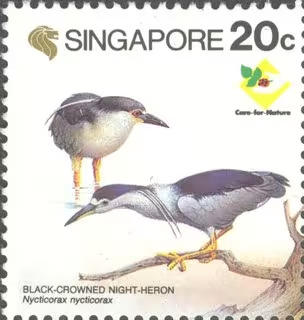
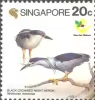
20c Black-Crowned Night Heron The Black-Crowned Night Heron is predominantly nocturnal, spending most of the day inside dense mangrove swamps and emerges after dark to feeding grounds which include marshes and ponds. It is a common resident bird.
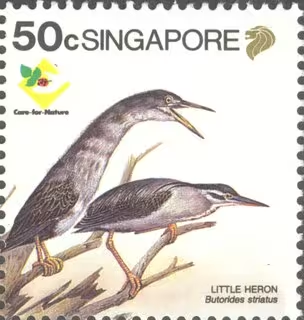
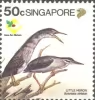
50c Little Heron The Little Heron is rather small and stocky and probably one of the most familiar birds around. It is seen mainly at tidal mudflats and estuaries as well as sandy beaches, rivers and reservoirs. The number of this resident bird is greatly augmented by winter migrants.
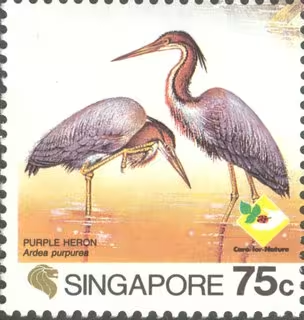
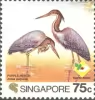
75c Purple Heron The Purple Heron is seen in coastal estuaries as well as near freshwater swamps, rivers and reservoirs. It is a large and slender bird which can be confused with the Grey Heron in flight. It is a common resident and migrant.
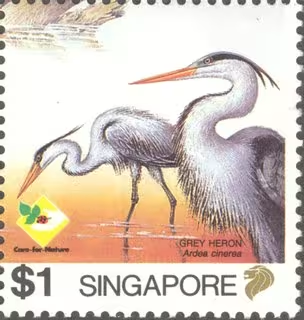
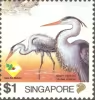
$1 Grey Heron The Grey Heron is one of the largest bird in Singapore and is commonly seen at coastal wetland habitats. It also occurs in fresh water swampy areas with rich grass and reed vegetation. This heron breeds in several small colonies close to the Kranji Reservoir.
This stamp issue is the fourth in a series sponsored by HongkongBank as part of its "Care for Nature" environment conservation and education programme. Launched in 1989, the programme aims to develop a greater understanding and appreciation of Singapore's natural environment so as to help preserve our country's unique natural heritage for future generations.