Overview
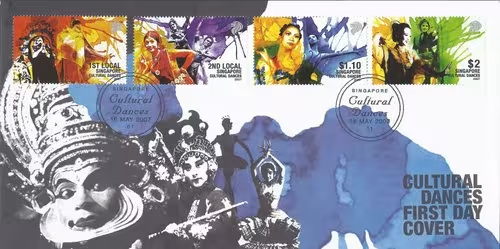
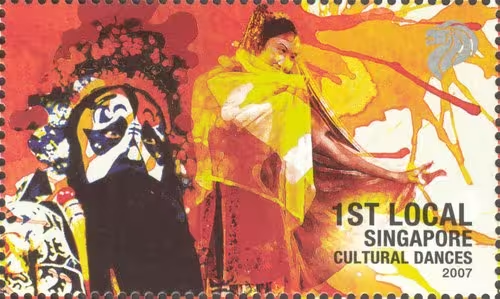
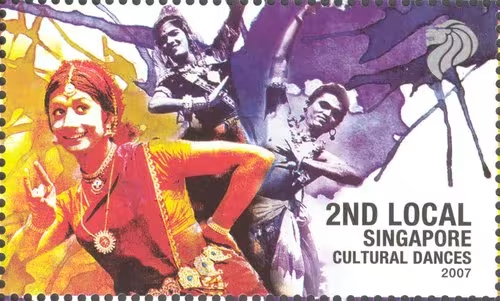
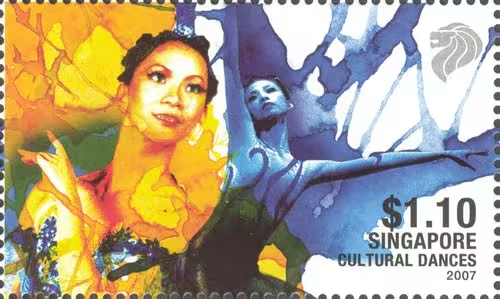
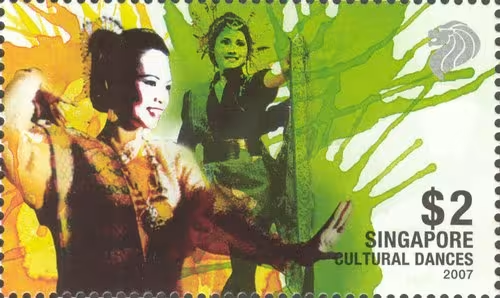
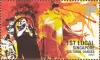
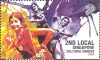
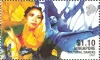
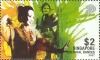
Singapore’s cultural dances offer a vibrant display of its multi-ethnic society. Behind each dance form – be it Chinese, Indian, Eurasian & Western or Malay – lies a wealth of history, culture, tradition and artistry. As seen in the four designs in this issue – for 1st Local, 2nd Local, $1.10 and $2 stamps – they provide a potpourri of cultural diversity and styles that is truly a feast for the senses.
CHINESE CULTURAL DANCES Introduced to Singapore by the migrant Chinese, these dances are rich and varied. They were originally steeped in folk tradition – performed at communities and celebrations. But with the flowering of arts and culture in the Han and Tang dynasties, more Chinese dance forms were created, especially for imperial court entertainment.
INDIAN CULTURAL DANCES In Indian culture, dance is a form of worship and an expression of human emotions. Divided into two categories – folk and classical – Indian cultural dances often include other art elements like Indian mythology, literature, music, poetry, mime and sculpture. Dancers usually enact stories through a series of facial expressions, elaborate body movements, hand symbols and postures.
EURASIAN & WESTERN CULTURAL DANCES Being a former British colony, Ballet and western dances like the Waltz and Tango are an integral part of Singapore’s culture. The Eurasian community – with its fusion of western and Asian parentage – has also made a distinctive mark on the local dance map. Mostly Portuguese in origin, with dance steps, music and costumes influenced by Portuguese folk dances, the repertoire includes dances like the Branyo. Uniquely Eurasian, they are often a mixture of Malay and Portuguese folk dances and were widely enjoyed by the earliest European settlers from Portugal.
MALAY CULTURAL DANCES From folk to ethnic-tribe to court-classical, Malay cultural dances are graceful and rhythmic. Among them, the most popular are the Ronggeng and the Joget. The traditional folk dances were usually performed in villages for joyful occasions such as weddings and engagements, while the ethnic-tribe dances were related to rituals, such as the harvest festival.