Singapore POST

Jurong Lake Gardens

Issue date 09 Sept 2024

Overview

Dating back to the early 1900s, the area where Jurong Lake Gardens is now sited was once a freshwater swamp with plantation farms till the 1960s when the area was conceived as an industrial town. This led to the clearing of swamps and levelling of hills for factories and other infrastructure.

Today, Jurong Lake Gardens, as Singapore's first national gardens in the heartlands, contributes towards efforts to transform Singapore into a City in Nature by restoring and extending nature into the Jurong district. The 90-hectare Gardens comprises Lakeside Garden, Chinese and Japanese Gardens, and Garden Promenade.

This stamp series showcases the four prominent features at Jurong Lake Gardens, as well as the flora and fauna you can observe while exploring the Gardens.

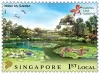
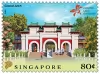
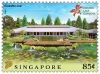
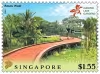
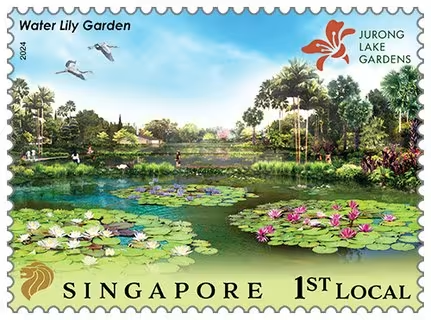
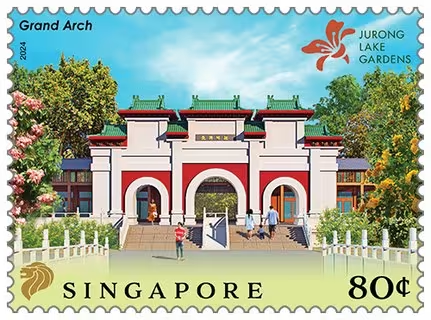
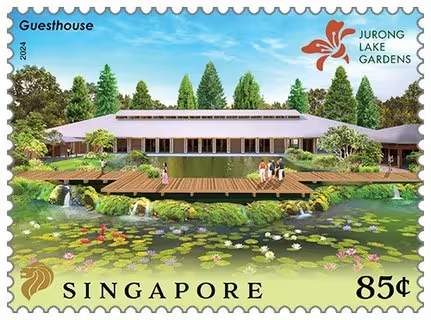
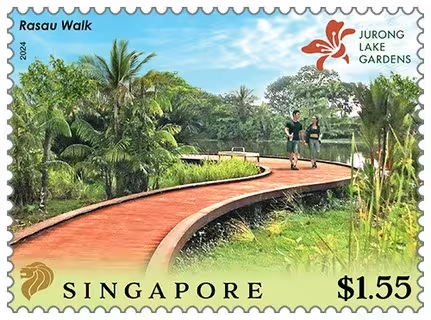
From the east entrance of the Japanese Garden, the Water Lily Garden provides a welcoming experience for visitors. It features a scenic walk along terraced water lily ponds, adorned with over 150 water lily species and cultivars. These species include the Pygmy Water Lily (Nymphaea tetragona) – an aquatic ornamental plant that blooms in summer and thus thrives in Singapore's almost year-round sunny environment, and night-blooming lilies along the boardwalk. Since the Grand Arch was first opened in 1975, it has served as an iconic gateway into the Chinese Garden and offers visitors refreshing views of the surrounding landscape. Jurong Lake Gardens is also a showcase for sustainable design. The Guesthouse in the Japanese Garden exemplifies this with the use of sustainable timber for its construction. It offers picturesque and tranquil views of the landscape and water features in the Japanese Garden. The 300-metre Rasau Walk meanders along the edge of Jurong Lake and brings visitors closer to plants that are found in naturally occurring freshwater swamp forests. Visitors can spot a wide range of biodiversity such as plants like the Nibong (Oncosperma tigillarium) and Rasau (Pandanus spp.), and shorebirds like the Grey Heron (Ardea cinerea) and White-breasted Waterhen (Amaurornis phoenicurus). These four features display the depth and inclusivity of the National Parks Board's design in creating a people's garden.
Jurong Lake Gardens
Jurong Lake Gardens
Jurong Lake Gardens
Jurong Lake Gardens
Technical specifications
Denomination1st Local, 80¢, 85¢, $1.55
Stamp Size40.8mm x 29.85mm
Perforation13.0
Paperunwatermarked
PrintingOffset Lithography
Sheet Content10 stamps per sheet
PrinterSecura Singapore Pte Ltd
Graphic DesignerWong Wui Kong
Singapore POST
Singapore POST
Singapore POST
Singapore POST

Jurong Lake Gardens

Issue date 09 Sept 2024

Dating back to the early 1900s, the area where Jurong Lake Gardens is now sited was once a freshwater swamp with plantation farms till the 1960s when the area was conceived as an industrial town. This led to the clearing of swamps and levelling of hills for factories and other infrastructure.

Today, Jurong Lake Gardens, as Singapore's first national gardens in the heartlands, contributes towards efforts to transform Singapore into a City in Nature by restoring and extending nature into the Jurong district. The 90-hectare Gardens comprises Lakeside Garden, Chinese and Japanese Gardens, and Garden Promenade.

This stamp series showcases the four prominent features at Jurong Lake Gardens, as well as the flora and fauna you can observe while exploring the Gardens.

From the east entrance of the Japanese Garden, the Water Lily Garden provides a welcoming experience for visitors. It features a scenic walk along terraced water lily ponds, adorned with over 150 water lily species and cultivars. These species include the Pygmy Water Lily (Nymphaea tetragona) – an aquatic ornamental plant that blooms in summer and thus thrives in Singapore's almost year-round sunny environment, and night-blooming lilies along the boardwalk. Since the Grand Arch was first opened in 1975, it has served as an iconic gateway into the Chinese Garden and offers visitors refreshing views of the surrounding landscape. Jurong Lake Gardens is also a showcase for sustainable design. The Guesthouse in the Japanese Garden exemplifies this with the use of sustainable timber for its construction. It offers picturesque and tranquil views of the landscape and water features in the Japanese Garden. The 300-metre Rasau Walk meanders along the edge of Jurong Lake and brings visitors closer to plants that are found in naturally occurring freshwater swamp forests. Visitors can spot a wide range of biodiversity such as plants like the Nibong (Oncosperma tigillarium) and Rasau (Pandanus spp.), and shorebirds like the Grey Heron (Ardea cinerea) and White-breasted Waterhen (Amaurornis phoenicurus). These four features display the depth and inclusivity of the National Parks Board's design in creating a people's garden.
Denomination

1st Local, 80¢, 85¢, $1.55

Stamp Size

40.8mm x 29.85mm

Perforation

13.0

Paper

unwatermarked

Printing

Offset Lithography

Sheet Content

10 stamps per sheet

Printer

Secura Singapore Pte Ltd

Graphic Designer

Wong Wui Kong

Jurong Lake Gardens

Issue date 09 Sept 2024

Jurong Lake GardensJurong Lake GardensJurong Lake GardensJurong Lake Gardens

Overview

Dating back to the early 1900s, the area where Jurong Lake Gardens is now sited was once a freshwater swamp with plantation farms till the 1960s when the area was conceived as an industrial town. This led to the clearing of swamps and levelling of hills for factories and other infrastructure.

Today, Jurong Lake Gardens, as Singapore's first national gardens in the heartlands, contributes towards efforts to transform Singapore into a City in Nature by restoring and extending nature into the Jurong district. The 90-hectare Gardens comprises Lakeside Garden, Chinese and Japanese Gardens, and Garden Promenade.

This stamp series showcases the four prominent features at Jurong Lake Gardens, as well as the flora and fauna you can observe while exploring the Gardens.

From the east entrance of the Japanese Garden, the Water Lily Garden provides a welcoming experience for visitors. It features a scenic walk along terraced water lily ponds, adorned with over 150 water lily species and cultivars. These species include the Pygmy Water Lily (Nymphaea tetragona) – an aquatic ornamental plant that blooms in summer and thus thrives in Singapore's almost year-round sunny environment, and night-blooming lilies along the boardwalk. Since the Grand Arch was first opened in 1975, it has served as an iconic gateway into the Chinese Garden and offers visitors refreshing views of the surrounding landscape. Jurong Lake Gardens is also a showcase for sustainable design. The Guesthouse in the Japanese Garden exemplifies this with the use of sustainable timber for its construction. It offers picturesque and tranquil views of the landscape and water features in the Japanese Garden. The 300-metre Rasau Walk meanders along the edge of Jurong Lake and brings visitors closer to plants that are found in naturally occurring freshwater swamp forests. Visitors can spot a wide range of biodiversity such as plants like the Nibong (Oncosperma tigillarium) and Rasau (Pandanus spp.), and shorebirds like the Grey Heron (Ardea cinerea) and White-breasted Waterhen (Amaurornis phoenicurus). These four features display the depth and inclusivity of the National Parks Board's design in creating a people's garden.
Technical specifications

Denomination1st Local, 80¢, 85¢, $1.55
Stamp Size40.8mm x 29.85mm
Perforation13.0
Paperunwatermarked
PrintingOffset Lithography
Sheet Content10 stamps per sheet
PrinterSecura Singapore Pte Ltd
Graphic DesignerWong Wui Kong
Subscribe to newsletter

Stay updated

Subscribe to our newsletter for the latest stamp releases, behind-the-scenes features, and exclusive stories from the vibrant world of philately.