Singapore POST

Critically Endangered Flora of Singapore – Flora of Coastal Forests

Issue date 30 May 2025

Overview

Singapore is home to more than 2,000 species of endemic and native species. Despite losing more than 90% of our original vegetation by 1900 and urbanisation and development since the 1960s, our greenery continues to flourish. This is due to careful planning and implementation of conservation strategies such as the Species Recovery Programme under the National Parks Board's (NParks) Nature Conservation Master Plan, which aims to conserve native flora and fauna, thereby ensuring their long-term survival in both our natural and urban environments. As an island nation, Singapore has many coastlines which are often covered with coastal plant species. Coastal vegetation is mainly found in mangrove forests, sandy beaches and rocky shores or cliffs such as those at Pulau Ubin, Labrador Nature Reserve and offshore islands like Sentosa and St. John's Island. These coastal habitats are characterised by seemingly inhospitable conditions such as high light intensity, exposure to wind, salt spray and a vastly changeable environment from the shifting tides.

To highlight some of these resilient native coastal plant species conserved under Singapore's Species Recovery Programme, the four featured in this stamp issue are the Cordia subcordata, Nephroia orbiculata, Ormocarpum cochinchinense and Ficus stricta.

With the loss of more than 95% of the native primeval forests by 1900 and urbanisation and development since the 1960s, Singapore's native flora and fauna remain vulnerable to the impact of development and climate change. As we continue to transform Singapore into a City in Nature, the NParks Nature Conservation Master Plan is a key component in the expansion, restoration and enhancement of our natural capital. One of its thrusts involves conservation of native species through habitat enhancement and species recovery.

As of 2024, 84 rare and endangered native plant species have been included in the Species Recovery Programme. Efforts have been made to collect their seeds and other plant material from various parts of Singapore to be propagated and nurtured at NParks' Native Plant Centre. These newly propagated plants will then be reintroduced to parks, gardens, streetscapes, and nature reserves. In doing so, the species' genome and home range are expanded, thereby increasing their chances of survival in the long run.

As an island nation, Singapore has many coastlines which are often covered with coastal plant species. Coastal vegetation is mainly found in mangrove forests, sandy beaches and rocky shores or cliffs such as those at Pulau Ubin, Labrador Nature Reserve and offshore islands like Sentosa and St. John's Island. These coastal habitats are characterised by seemingly inhospitable conditions such as high light intensity, exposure to wind, salt spray and a vastly changeable environment from the shifting tides.

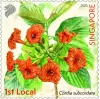
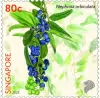
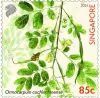
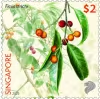
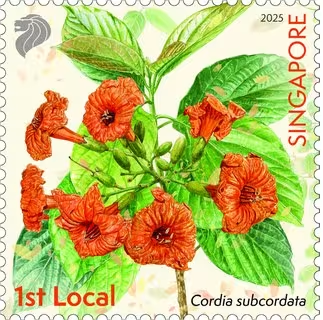
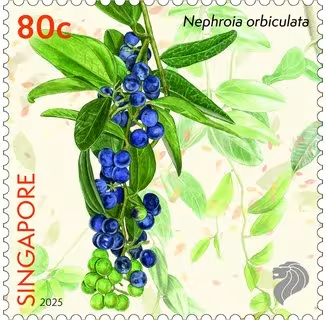
The four species highlighted in this series are considered critically endangered in Singapore and are included in the Species Recovery Programme. Seeds and plant materials have been collected throughout Singapore such as at Labrador Nature Reserve and Pulau Ubin. Nephroia orbiculata or Queen Coralbead is a sprawling vine with dark blue, grape-like fruits. Ficus stricta, a strangling fig tree found in tropical and sub-tropical forests produces dark red figs that are eaten by birds. Cordia subcordata or Sea Trumpet is a small tree with showy, trumpet-like flowers that are bright orange in colour. Ormocarpum cochinchinense, a small shrub to tree with yellow to white flowers that develop into sickle-shaped pods.
Buy now
Critically Endangered Flora of Singapore – Flora of Coastal Forests
Technical specifications
Denomination1st Local, 80¢, 85¢, $2
Stamp Size35mm x 35mm
Minipane Size90mm x 90mm
Perforation13
Paperunwatermarked
PrintingOffset Lithography
Sheet Content10 stamps per sheet
PrinterSecura Singapore Pte Ltd
Graphic DesignerTeo Nam Siang
Singapore POST
Singapore POST
Singapore POST
Singapore POST

Critically Endangered Flora of Singapore – Flora of Coastal Forests

Issue date 30 May 2025

Buy now

Singapore is home to more than 2,000 species of endemic and native species. Despite losing more than 90% of our original vegetation by 1900 and urbanisation and development since the 1960s, our greenery continues to flourish. This is due to careful planning and implementation of conservation strategies such as the Species Recovery Programme under the National Parks Board's (NParks) Nature Conservation Master Plan, which aims to conserve native flora and fauna, thereby ensuring their long-term survival in both our natural and urban environments. As an island nation, Singapore has many coastlines which are often covered with coastal plant species. Coastal vegetation is mainly found in mangrove forests, sandy beaches and rocky shores or cliffs such as those at Pulau Ubin, Labrador Nature Reserve and offshore islands like Sentosa and St. John's Island. These coastal habitats are characterised by seemingly inhospitable conditions such as high light intensity, exposure to wind, salt spray and a vastly changeable environment from the shifting tides.

To highlight some of these resilient native coastal plant species conserved under Singapore's Species Recovery Programme, the four featured in this stamp issue are the Cordia subcordata, Nephroia orbiculata, Ormocarpum cochinchinense and Ficus stricta.

With the loss of more than 95% of the native primeval forests by 1900 and urbanisation and development since the 1960s, Singapore's native flora and fauna remain vulnerable to the impact of development and climate change. As we continue to transform Singapore into a City in Nature, the NParks Nature Conservation Master Plan is a key component in the expansion, restoration and enhancement of our natural capital. One of its thrusts involves conservation of native species through habitat enhancement and species recovery.

As of 2024, 84 rare and endangered native plant species have been included in the Species Recovery Programme. Efforts have been made to collect their seeds and other plant material from various parts of Singapore to be propagated and nurtured at NParks' Native Plant Centre. These newly propagated plants will then be reintroduced to parks, gardens, streetscapes, and nature reserves. In doing so, the species' genome and home range are expanded, thereby increasing their chances of survival in the long run.

As an island nation, Singapore has many coastlines which are often covered with coastal plant species. Coastal vegetation is mainly found in mangrove forests, sandy beaches and rocky shores or cliffs such as those at Pulau Ubin, Labrador Nature Reserve and offshore islands like Sentosa and St. John's Island. These coastal habitats are characterised by seemingly inhospitable conditions such as high light intensity, exposure to wind, salt spray and a vastly changeable environment from the shifting tides.

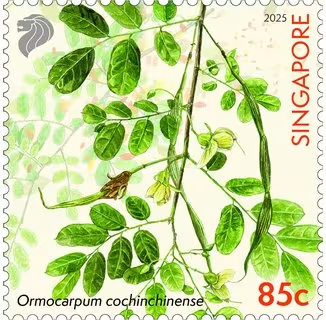
The four species highlighted in this series are considered critically endangered in Singapore and are included in the Species Recovery Programme. Seeds and plant materials have been collected throughout Singapore such as at Labrador Nature Reserve and Pulau Ubin. Nephroia orbiculata or Queen Coralbead is a sprawling vine with dark blue, grape-like fruits. Ficus stricta, a strangling fig tree found in tropical and sub-tropical forests produces dark red figs that are eaten by birds. Cordia subcordata or Sea Trumpet is a small tree with showy, trumpet-like flowers that are bright orange in colour. Ormocarpum cochinchinense, a small shrub to tree with yellow to white flowers that develop into sickle-shaped pods.
Denomination

1st Local, 80¢, 85¢, $2

Stamp Size

35mm x 35mm

Minipane Size

90mm x 90mm

Perforation

13

Paper

unwatermarked

Printing

Offset Lithography

Sheet Content

10 stamps per sheet

Printer

Secura Singapore Pte Ltd

Graphic Designer

Teo Nam Siang

Critically Endangered Flora of Singapore – Flora of Coastal Forests

Issue date 30 May 2025

Critically Endangered Flora of Singapore – Flora of Coastal ForestsCritically Endangered Flora of Singapore – Flora of Coastal ForestsCritically Endangered Flora of Singapore – Flora of Coastal ForestsCritically Endangered Flora of Singapore – Flora of Coastal Forests

Overview

Singapore is home to more than 2,000 species of endemic and native species. Despite losing more than 90% of our original vegetation by 1900 and urbanisation and development since the 1960s, our greenery continues to flourish. This is due to careful planning and implementation of conservation strategies such as the Species Recovery Programme under the National Parks Board's (NParks) Nature Conservation Master Plan, which aims to conserve native flora and fauna, thereby ensuring their long-term survival in both our natural and urban environments. As an island nation, Singapore has many coastlines which are often covered with coastal plant species. Coastal vegetation is mainly found in mangrove forests, sandy beaches and rocky shores or cliffs such as those at Pulau Ubin, Labrador Nature Reserve and offshore islands like Sentosa and St. John's Island. These coastal habitats are characterised by seemingly inhospitable conditions such as high light intensity, exposure to wind, salt spray and a vastly changeable environment from the shifting tides.

To highlight some of these resilient native coastal plant species conserved under Singapore's Species Recovery Programme, the four featured in this stamp issue are the Cordia subcordata, Nephroia orbiculata, Ormocarpum cochinchinense and Ficus stricta.

With the loss of more than 95% of the native primeval forests by 1900 and urbanisation and development since the 1960s, Singapore's native flora and fauna remain vulnerable to the impact of development and climate change. As we continue to transform Singapore into a City in Nature, the NParks Nature Conservation Master Plan is a key component in the expansion, restoration and enhancement of our natural capital. One of its thrusts involves conservation of native species through habitat enhancement and species recovery.

As of 2024, 84 rare and endangered native plant species have been included in the Species Recovery Programme. Efforts have been made to collect their seeds and other plant material from various parts of Singapore to be propagated and nurtured at NParks' Native Plant Centre. These newly propagated plants will then be reintroduced to parks, gardens, streetscapes, and nature reserves. In doing so, the species' genome and home range are expanded, thereby increasing their chances of survival in the long run.

As an island nation, Singapore has many coastlines which are often covered with coastal plant species. Coastal vegetation is mainly found in mangrove forests, sandy beaches and rocky shores or cliffs such as those at Pulau Ubin, Labrador Nature Reserve and offshore islands like Sentosa and St. John's Island. These coastal habitats are characterised by seemingly inhospitable conditions such as high light intensity, exposure to wind, salt spray and a vastly changeable environment from the shifting tides.

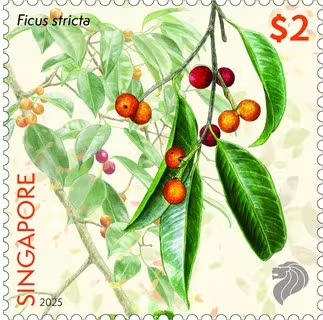
The four species highlighted in this series are considered critically endangered in Singapore and are included in the Species Recovery Programme. Seeds and plant materials have been collected throughout Singapore such as at Labrador Nature Reserve and Pulau Ubin. Nephroia orbiculata or Queen Coralbead is a sprawling vine with dark blue, grape-like fruits. Ficus stricta, a strangling fig tree found in tropical and sub-tropical forests produces dark red figs that are eaten by birds. Cordia subcordata or Sea Trumpet is a small tree with showy, trumpet-like flowers that are bright orange in colour. Ormocarpum cochinchinense, a small shrub to tree with yellow to white flowers that develop into sickle-shaped pods.
Technical specifications

Denomination1st Local, 80¢, 85¢, $2
Stamp Size35mm x 35mm
Minipane Size90mm x 90mm
Perforation13
Paperunwatermarked
PrintingOffset Lithography
Sheet Content10 stamps per sheet
PrinterSecura Singapore Pte Ltd
Graphic DesignerTeo Nam Siang
Subscribe to newsletter

Stay updated

Subscribe to our newsletter for the latest stamp releases, behind-the-scenes features, and exclusive stories from the vibrant world of philately.