Singapore POST

Spices of Singapore

Issue date 15 Jul 2011

Overview

Do you know spices were as valuable as gold in the 19th century? In this special stamp issue, we introduce you to three spices found in the Spice Garden: Tamarind, Cinnamon and Turmeric, as well as two other spices commonly used in local cuisines - Coriander and Star Anise.

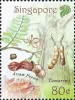
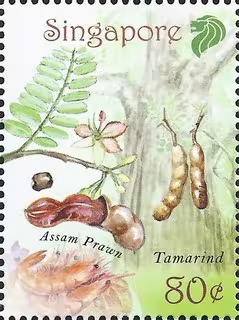
Tamarind comes from the elongated velvety pod of the Tamarind tree (Tamarindus indicus). The sweet and sour juice extracted from the pulp is widely used to prepare local delights, such as the traditional fruit and vegetable salad dish commonly known as "rojak".

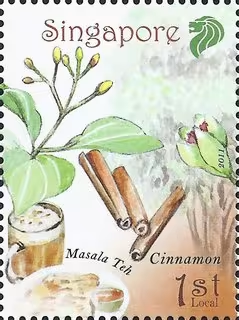
The aromatic Cinnamon is obtained from the inner bark of the Cinnamon tree (Cinnamomum verum), a small evergreen tree that can grow to about 10m tall. Principally used as a condiment in beverages, as well as in desserts, it also has medicinal value as it contains high antioxidant properties.

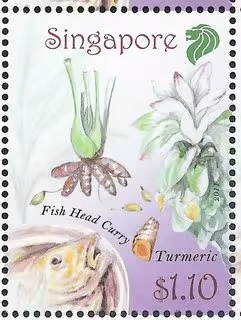
Most often used in powder form, Turmeric is derived from the rhizome (horizontal root-stem) of the Turmeric (Curcuma longa) plant. The rhizome is harvested and ground to a fine deep orange-yellow powder, which is a key ingredient in curries and many other cuisines.

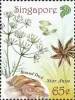
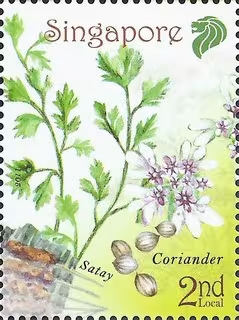
All parts of the Coriander (Coriandrum sativum) plant are edible, but the fresh leaves, roots and the dried seeds are the parts most commonly used in cooking, often used in marinating meat for Satay.

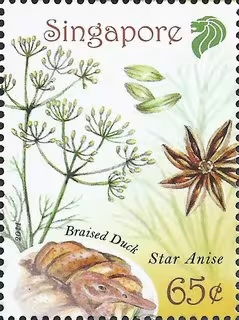
Star Anise is a spice that closely resembles anise in flavour. It is obtained from the star-shaped dried fruit of the tree (Illicium verum), which is native to southwest China. Like anise, star anise gets its distinctive, intense flavour from a chemical compound called anethol.
Spices of Singapore
Spices of Singapore
Spices of Singapore
Spices of Singapore
Spices of Singapore
Technical specifications
Denomination1st Local, 2nd Local, 65¢, 80¢, $1.10
Stamp Size30mm x 40mm
Perforation14.0
Paperunwatermarked
PrintingOffset Lithography
Sheet Content10 stamps per sheet
PrinterSouthern Colour Print
Graphic DesignerJanny Jin Li Juan
Singapore POST
Singapore POST
Singapore POST
Singapore POST
Singapore POST

Spices of Singapore

Issue date 15 Jul 2011

Do you know spices were as valuable as gold in the 19th century? In this special stamp issue, we introduce you to three spices found in the Spice Garden: Tamarind, Cinnamon and Turmeric, as well as two other spices commonly used in local cuisines - Coriander and Star Anise.

Tamarind comes from the elongated velvety pod of the Tamarind tree (Tamarindus indicus). The sweet and sour juice extracted from the pulp is widely used to prepare local delights, such as the traditional fruit and vegetable salad dish commonly known as "rojak".

The aromatic Cinnamon is obtained from the inner bark of the Cinnamon tree (Cinnamomum verum), a small evergreen tree that can grow to about 10m tall. Principally used as a condiment in beverages, as well as in desserts, it also has medicinal value as it contains high antioxidant properties.

Most often used in powder form, Turmeric is derived from the rhizome (horizontal root-stem) of the Turmeric (Curcuma longa) plant. The rhizome is harvested and ground to a fine deep orange-yellow powder, which is a key ingredient in curries and many other cuisines.

All parts of the Coriander (Coriandrum sativum) plant are edible, but the fresh leaves, roots and the dried seeds are the parts most commonly used in cooking, often used in marinating meat for Satay.

Star Anise is a spice that closely resembles anise in flavour. It is obtained from the star-shaped dried fruit of the tree (Illicium verum), which is native to southwest China. Like anise, star anise gets its distinctive, intense flavour from a chemical compound called anethol.
Denomination

1st Local, 2nd Local, 65¢, 80¢, $1.10

Stamp Size

30mm x 40mm

Perforation

14.0

Paper

unwatermarked

Printing

Offset Lithography

Sheet Content

10 stamps per sheet

Printer

Southern Colour Print

Graphic Designer

Janny Jin Li Juan

Spices of Singapore

Issue date 15 Jul 2011

Spices of SingaporeSpices of SingaporeSpices of SingaporeSpices of SingaporeSpices of Singapore

Overview

Do you know spices were as valuable as gold in the 19th century? In this special stamp issue, we introduce you to three spices found in the Spice Garden: Tamarind, Cinnamon and Turmeric, as well as two other spices commonly used in local cuisines - Coriander and Star Anise.

Tamarind comes from the elongated velvety pod of the Tamarind tree (Tamarindus indicus). The sweet and sour juice extracted from the pulp is widely used to prepare local delights, such as the traditional fruit and vegetable salad dish commonly known as "rojak".

The aromatic Cinnamon is obtained from the inner bark of the Cinnamon tree (Cinnamomum verum), a small evergreen tree that can grow to about 10m tall. Principally used as a condiment in beverages, as well as in desserts, it also has medicinal value as it contains high antioxidant properties.

Most often used in powder form, Turmeric is derived from the rhizome (horizontal root-stem) of the Turmeric (Curcuma longa) plant. The rhizome is harvested and ground to a fine deep orange-yellow powder, which is a key ingredient in curries and many other cuisines.

All parts of the Coriander (Coriandrum sativum) plant are edible, but the fresh leaves, roots and the dried seeds are the parts most commonly used in cooking, often used in marinating meat for Satay.

Star Anise is a spice that closely resembles anise in flavour. It is obtained from the star-shaped dried fruit of the tree (Illicium verum), which is native to southwest China. Like anise, star anise gets its distinctive, intense flavour from a chemical compound called anethol.
Technical specifications

Denomination1st Local, 2nd Local, 65¢, 80¢, $1.10
Stamp Size30mm x 40mm
Perforation14.0
Paperunwatermarked
PrintingOffset Lithography
Sheet Content10 stamps per sheet
PrinterSouthern Colour Print
Graphic DesignerJanny Jin Li Juan
Subscribe to newsletter

Stay updated

Subscribe to our newsletter for the latest stamp releases, behind-the-scenes features, and exclusive stories from the vibrant world of philately.