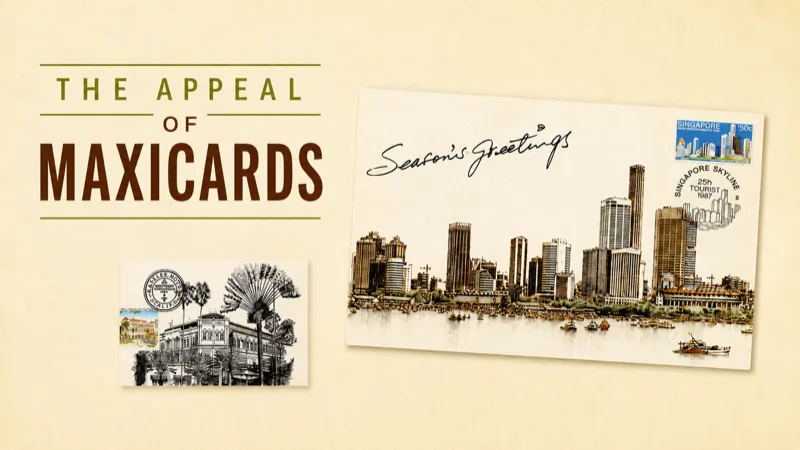
Maximum postcards, also known as matching postcards, have in recent years become extremely popular among stamp collectors in Singapore, and are now a sought-after philatelic collectible.
The world’s first postcard was born in Austria in 1869. Over the past century and more, postcards have appeared in countless varieties and designs, with scenic postcards being among the most common. Maximum postcards, however, have a much shorter history and are undoubtedly a newer generation within the postcard “family.” What makes maximum postcards unique is their emphasis on the unity of three elements: the postcard, the postage stamp, and the postmark. In other words, on the illustrated side of the postcard, a stamp with a similar image is affixed and then cancelled with a related postmark. For example, if the image on the postcard shows the Singapore River, then the stamp should also feature the Singapore River, and it should be cancelled with a relevant local postmark or the first-day-of-issue postmark for that stamp. In this way, it becomes a “three-in-one” work of art.
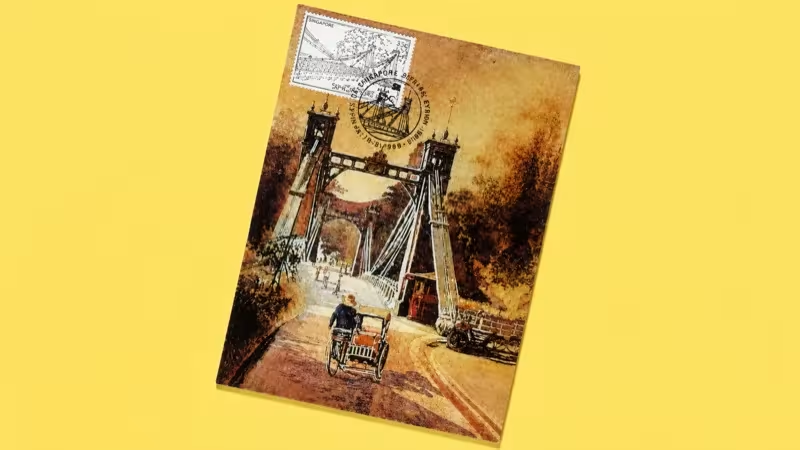
On 7 August 1991, the Philatelic Section of Singapore’s Telecommunication Authority issued a set of three “Orchid” special stamps and released two maximum postcards. This was the first official set of maximum postcards, and it drew much attention. Subsequently, on 16 November, in conjunction with the issue of stamps commemorating the World Philatelic Exhibition in Japan, three “Morning Glory” maximum postcards were released. After Singapore Post Private Limited was officially established on 1 April 1992, its Philatelic Section released three more sets of maximum postcards. First, on 24 April, on the day six commemorative Olympic Games stamps were issued, three maximum postcards were released, featuring designs for swimming, football, and running. On 22 May, with the issue of a complete set of four Traditional Costumes special stamps, a complete set of four maximum postcards was also released. On 8 August, when three stamps were issued to mark the 25th anniversary of ASEAN, two maximum postcards were released at the same time.
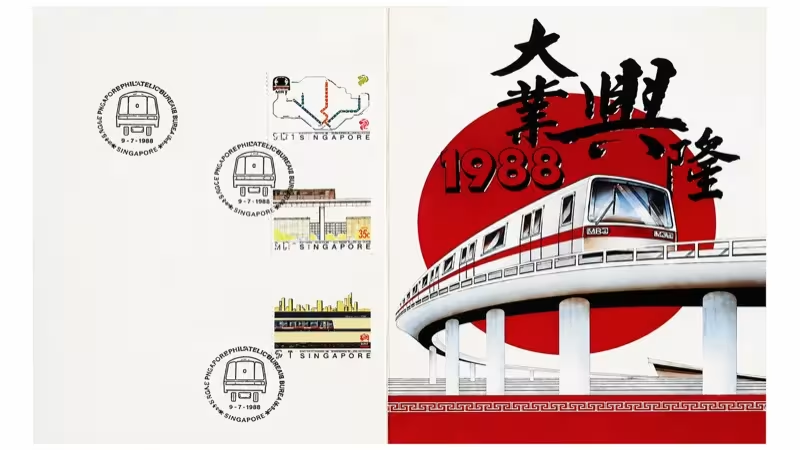
For a long time, many stamp collectors have made maximum postcards according to their own interests. Apart from looking for suitable postcards available for purchase, some have also made illustrated cards by hand. For example, they might take photographs of relevant scenery, or cut out pictures from magazines and paste them onto thick card. Some of these collectibles may perhaps be less refined in execution, but they are still members of the maximum postcard “family.” Similarly, using greeting cards that feature relevant scenery, including Christmas cards and New Year cards, is not very different in meaning from using postcards to create maximum postcards, and is also worthy of recognition and appreciation.
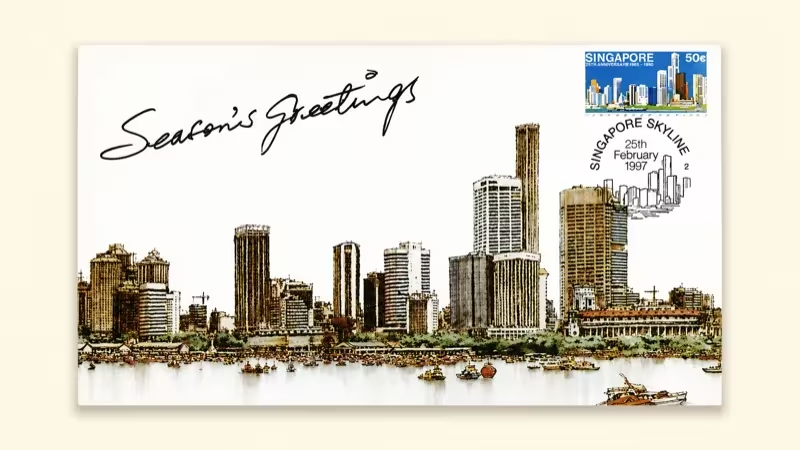
Over the years, I have successively created a wide variety of colourful maximum postcards, far exceeding one hundred types in total. Most of them use carefully designed, elegant and beautiful greeting cards. Their subjects include the Merlion, orchids, birds, butterflies, transport, Raffles Hotel, Haw Par Villa, the MRT, and doves for the Year of Peace, among others. Together, they resemble a splendid postcard garden in full bloom.
SLiGE, whose original name is Koh Eng Soon, is a community worker. In recent years, he has published editorials, historical articles, and philatelic writings in Chinese-language newspapers and magazines. While researching the history of Chinatown, he also focuses on collecting Singapore postcards, commemorative covers from stamp exhibitions both local and overseas, first-day covers, registered covers, and other philatelic materials. He actively participates in the activities of the Chinatown Philatelic Society.