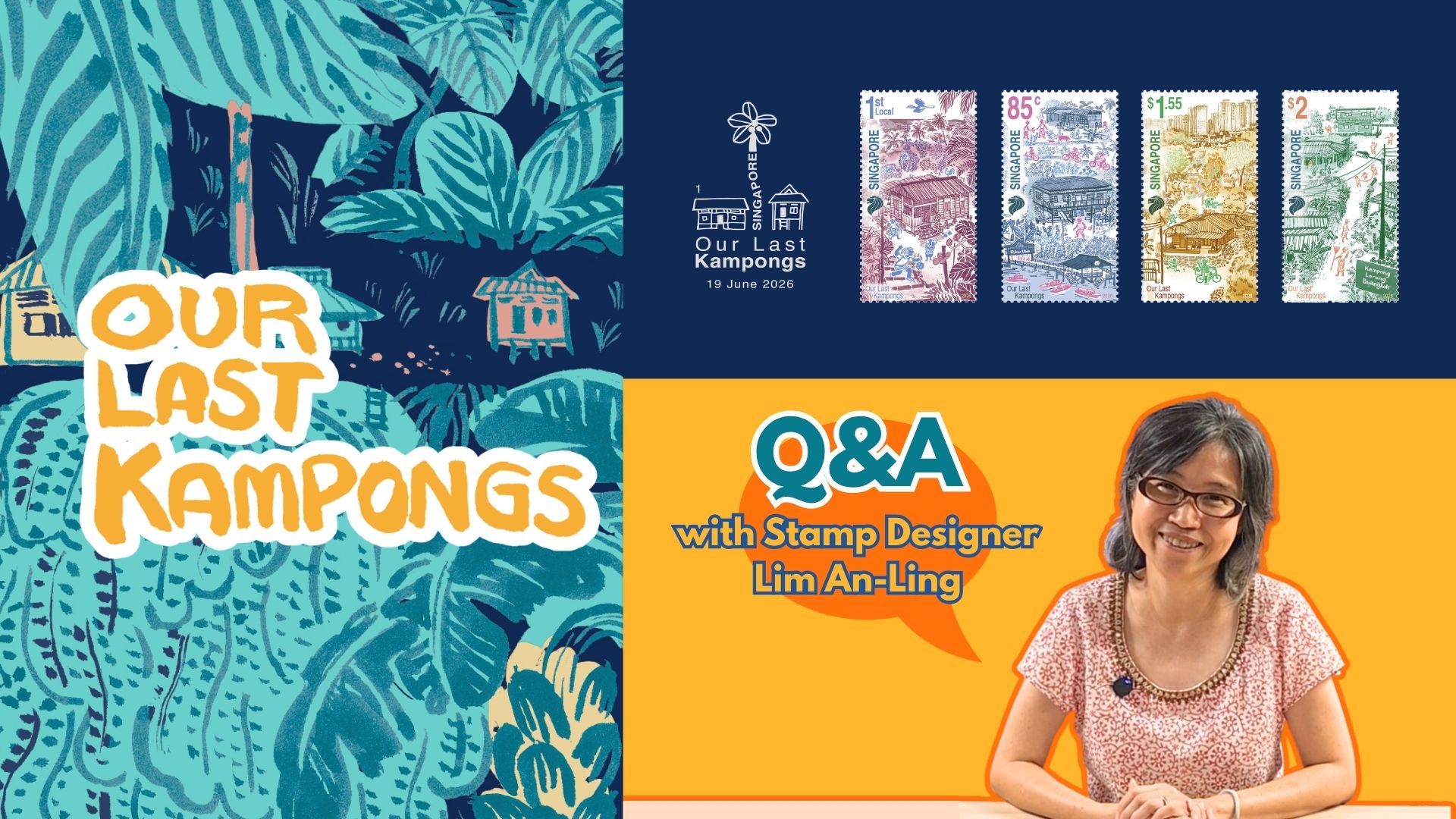
What got you inspired for this series of stamp designs?
My brother once gave me a picture book by Arthur Tress. A rare book made up of photos and short texts that tells the story of the creation of myths through objects in a toy theatre. I've always loved the book.
Since a stamp is tiny, there were only so many ways to go - use illustrations, real-life photos, etc. Share with us why you chose to incorporate handmade clay figurines into the stamp designs. And how was this special medium determined?
I think size is not so much of a concern in terms of the medium chosen here. Some of the most beautiful stamps have been of huge paintings and sculptures. I was wanting to portray this issue as stories put together in individual scenes, like the miniature Dioramas that used to be in our National History Museum - but in a more playful way. Clay models have a naive quality that is suitable in this venture. As this mixed-medium style is not a conventional approach and could look rather absurd to some, I was happily surprised and thankful to hear that it has been accepted.
What are the concerns / challenges you faced when designing and how did you overcome it?
First, is what is to be made of clay and what is to be created in pen-and-ink - that was determined by juggling between contents and aesthetics. Then, is the concern for all stamps to look like one set - for that, feedback and discussions with SingPost have helped to put things into perspective.
As a national stamp designer, what does Singapore's Bicentennial mean to you?
It is a turn of a chapter, a change of scene as reflected in this set of stamp designs.
About the Designer
Lim An-ling is an animator and illustrator. She has made short animated films and promotional videos. She illustrates for magazines and books for both adults and children. She had a joint exhibition using similar method of clay and photography in Tsukuba Museum of Art in 2015. Her first Stamp Issue was Vanishing Trades.
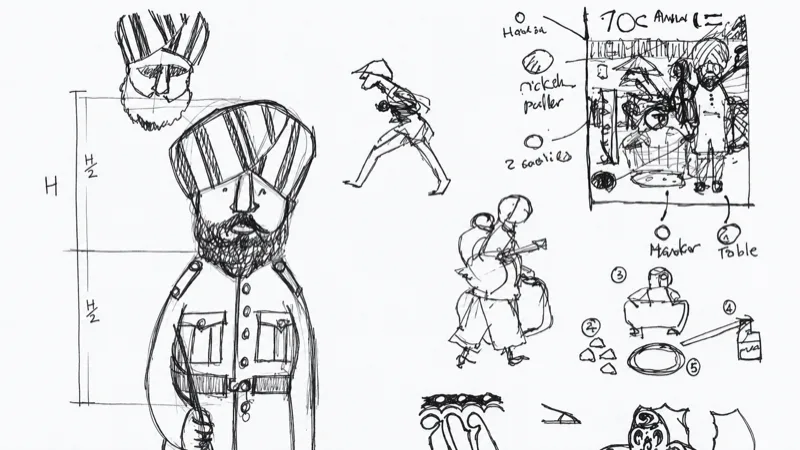
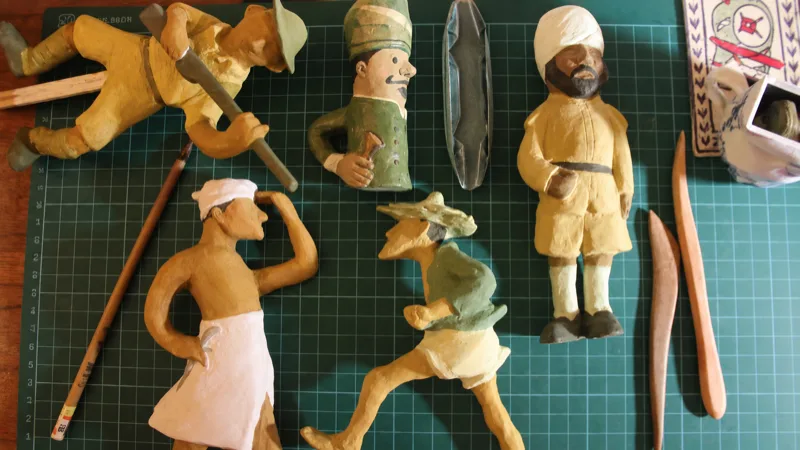
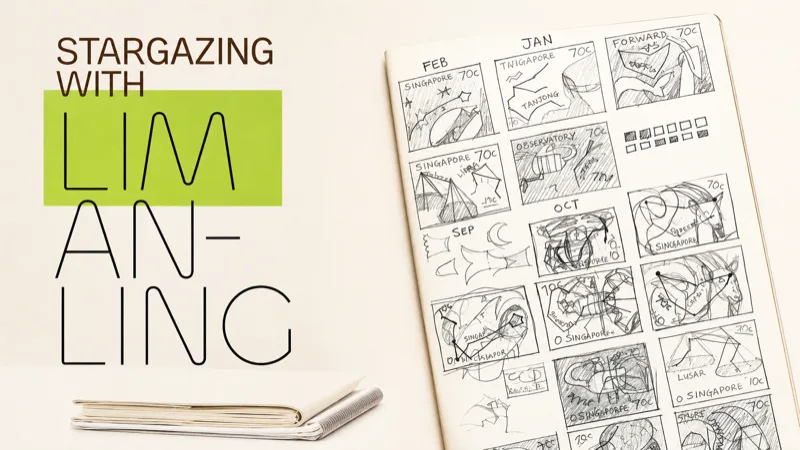
From conceptual sketches to clay figurines.