The writer, Mr Sim Yeong Hak, is an avid stamp collector. An ex-principal of Canberra Primary School, he spends most of his time helping newcomers starting this exciting hobby of stamp collecting. Mr Sim also gives regular talks on stamp collecting at stamp club meetings in community centres in Singapore.
As a hobby, stamp collecting is the greatest. It means so many things to so many people in the world. It captures the hearts and minds of people from all walks of life: rich and poor, young and old, the humble and the powerful. It is not difficult for you to start a collection whatever your age. The hobby will help you increase your knowledge and pass your time pleasantly, often in the company of fellow collectors.
How do you get started? Join a stamp club in Singapore. Currently, there are several in our community centres. For example, the Kreta Ayer Community Centre and the Chai Chee Community Centre stamp clubs hold their meetings on Sunday afternoons. The Kuo Chuan Community Centre stamp club meets on Saturday afternoons from 3.00 p.m. You will learn the finer points of stamp collecting from these clubs.
The next thing to do is to look for stamps. Start with current Singapore stamps because they are readily available and cheap. Collect used stamps first because they are generally cheaper. Personally, I prefer mint stamps as they look fresh and clean. If you decide to collect mint stamps, then I recommend that you start a Standing Order Deposit Account (SODA) with Singapore Philatelic Bureau. This will give you a ready source of new stamps. For used stamps, contact all your friends and relatives. They will be able to help you obtain not only Singapore stamps but also stamps from other countries. Other sources of getting stamps include exchanging stamps with overseas correspondents and buying them from dealers in Singapore or from overseas.
The stamps you wish to collect could include one or more of the following:
(a) Country collection, i.e., stamps from one or more countries;
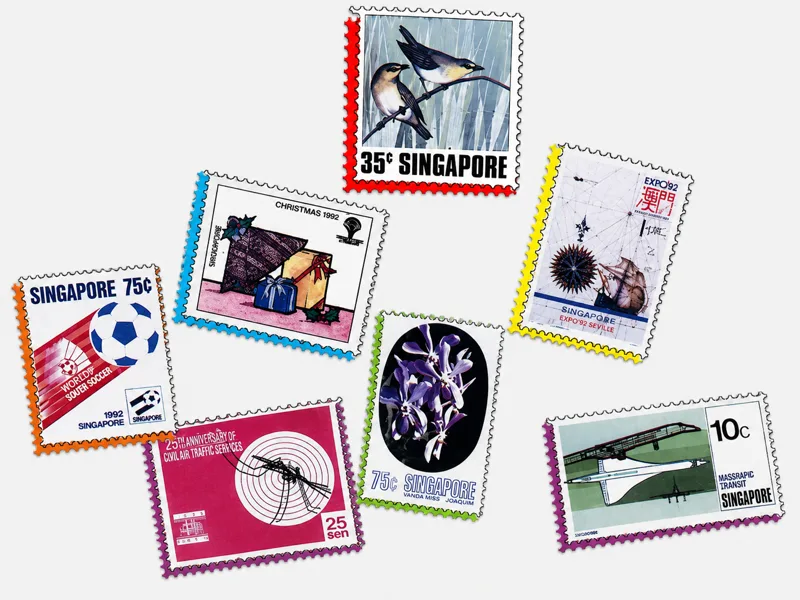
(b) Thematic collection, i.e., stamps showing different subjects or themes, for example, flowers, birds, soccer, scouts and aeroplanes;
(c) Other collections including:
- cinderella or "unofficial" stamps like our SATA stamps;
- machine printed stamps (usually in red); and
- self-adhesive postage labels which you can obtain from dispensing machines at our post offices.
There are several ways of collecting stamps. You can collect them according to their countries of origin or by subjects or themes such as butterflies, flowers and birds. Stamps are arranged or kept in stamp albums. To protect them from being damaged, you should mount stamps on Hawid strips, that is, special transparent strips which are specially manufactured for this purpose.
To get a better insight into the hobby, there are lots of reading material in our libraries to refer to. Just to mention a few, there are several stamp magazines like the Stanley Gibbons' Stamp Magazines and Catalogues. There are many books which show you how to arrange stamps, prepare your stamps for exhibitions and what to look for when you buy or sell stamps.
Remember that your spare or extra stamps can be sold to or exchanged with fellow collectors at club meetings when there is an auction or public sale of stamps. You can also send in your spare stamps in lots to be sold publicly. Usually you have to pay a small sum of money (10%) to the person or club who helps you sell your stamps.
Finally, try to attend as many talks, auctions and exhibitions on stamps as possible. Happy collecting!