Overview
Conservation has become an integral part of Singapore's city planning. With rapid urban and economic development, Singapore has been radically transformed into a highly modern city state. In the midst of such relentless transformation, historical buildings and areas could not have escaped the "death knell". Many of them were demolished to make way for new developments.
The importance of conserving our country's heritage became evident with the realisation that the historic buildings and areas reflect the culture, values and lifestyles of the past and form an essential part of the nation's history. The joint public-private conservation efforts have since been spearheaded by the Urban Redevelopment Authority (URA) as the national Conservation Authority.
In this context, we have also started an Architectural Heritage Series of stamps. The first issue in the series is on the conservation of Tanjong Pagar. In 1987, under the pilot restoration project, shophouses along the upper triangle bounded by Tanjong Pagar and Neil Roads were restored and readapted for use as shops, offices and restaurants. The special character of the place has been retained and Tanjong Pagar today has been given a new lease of life.
Tanjong Pagar was originally a fishing village that gradually developed into the gateway for Chinese immigrants, namely the coolies, stevedores and rickshaw pullers. By the 1970s, Tanjong Pagar had deteriorated into a slum and steps were needed to revitalise the neighbourhood.
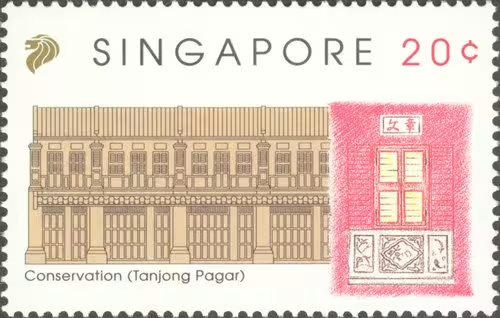
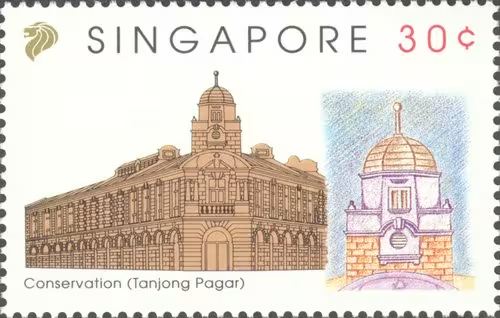
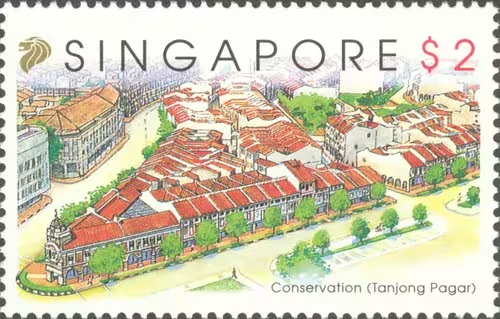
The three stamps in this issue reflect Tanjong Pagar as it is today. On the 20¢ stamp are the restored shophouses along Duxton Hill. The 30¢ stamp features the Jinrikisha Station and the overview of Tanjong Pagar is illustrated on the $2 design.
This stamp issue is designed by two artists, Ng Keng Seng and newcomer William Kee. Each of them conveyed the stamp theme in a different style. William chose to illustrate the buildings on the 20¢ and 30¢ denominations in simple yet striking black and white line drawings and selected a unique feature of each building for special highlight. Keng Seng, on the other hand, has meticulously drawn the entire extent of the Tanjong Pagar conservation area.
The designs, when put together, make up an interesting set of stamps. Complementing the three stamps are two matching maxicards designed by William Kee. The whole set including stamps, maxicards and attractively designed ancillary products is a charming tribute to one of the few remaining traditional areas of Singapore.