Overview
2006 marks an important milestone in Singapore's history. 25 years ago, Singapore began to harness information technology for its socio-economic development. Beginning with the government sector, Singapore embarked on national computerisation in 1981. The aim was to use technology to enable the government to serve citizens and business more efficiently and effectively. Subsequent national plans were rolled out to transform the economy as well as society through the use of technology. An island-wide broadband network was built in the 1990s, and it delivered interactive, multimedia applications and services to businesses and schools. The liberalisation of Singapore's telecommunications sector in 2000 also saw more innovative products and services being developed.
Today, Singapore is recognised internationally for its successful use of technology to become a modern city state. It is ranked among the top e-governments in the world. More than three quarters of households in Singapore have access to a computer. Going online for communications, information and services is common among the population.
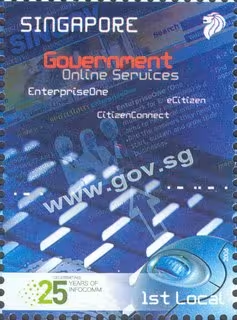
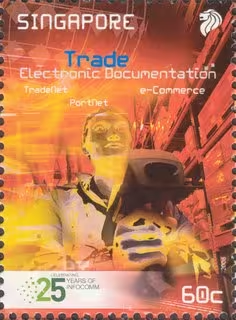
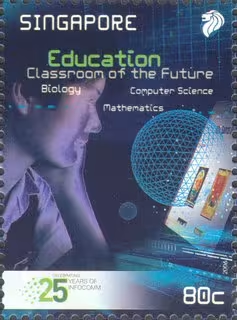
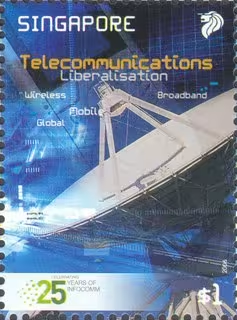
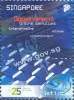
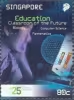
This set of stamps depicts how infocomm technology has transformed key sectors like education, finance, healthcare, logistics and high-tech manufacturing, government, digital media and entertainment, tourism and retail. They celebrate significant developments and achievements in these sectors through the use of infocomm technology.