Overview
Singapore is home to more than 2,000 species of native and endemic plants. Despite losing more than 95% of our forests after colonisation, and rapid urbanisation and development since independence in the 1960s, our biodiversity remains resilient. In the last decade or so, over 500 species of plants and animals have been discovered and some thought to be extinct in Singapore were rediscovered by researchers. These species remain vulnerable to the impact of development and climate change. Thus, as part of efforts to transform Singapore into a City in Nature, the National Parks Board (NParks) has been expanding, restoring, and enhancing our natural capital. Singapore’s Nature Conservation Master Plan is a key component of these efforts, and one of its thrusts involve conservation of native species through habitat enhancement and species recovery.
Currently, 80 rare and endangered plants are on the Species Recovery Programme. Efforts have been made to collect the seeds, fruits, and other plant material of these species in their natural habitats to be propagated in NParks’ Native Plant Centre. These plants will then be reintroduced to parks, gardens, roadsides, and nature reserves. In doing so, the plants’ genome and home range are expanded, thereby increasing their chances of survival in the long run.
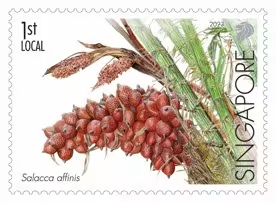
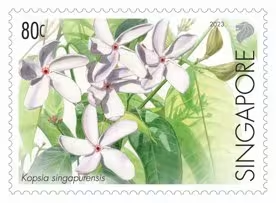
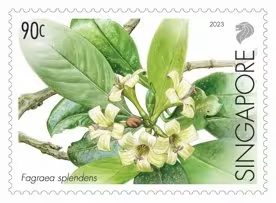
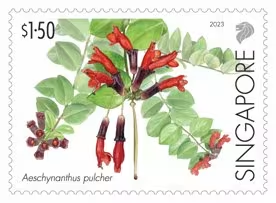
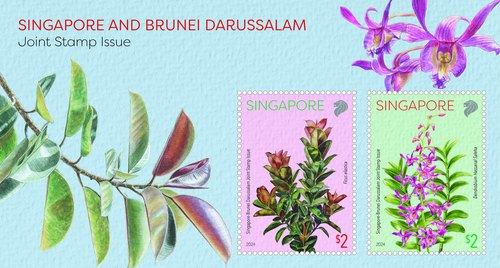
The four species showcased here are on the Species Recovery Programme and were all found or rediscovered from Nee Soon Swamp Forest, Singapore’s last substantial patch of freshwater swamp forest located in the Central Catchment Nature Reserve. Aeschynanthus Pulcher or Lipstick Plant is a popular native ornamental plant. It was believed to be extinct in the wild in Singapore until its rediscovery in 2013. Similarly, Fagraea Splendens was thought to be extinct in Singapore until its rediscovery in 2010. Kopsia Singapurensis or the Singapore Kopsia, was first described by the first scientific director of the Singapore Botanic Gardens, Henry Nicholas Ridley, from specimens in Singapore in 1894. It was collected in the wild in 1920 and was not seen again until 2011 when it was collected from the Freshwater Swamp Forest. Salacca Affinis or Red Salak, was thought to be extinct in Singapore until its rediscovery in 2011. The rediscovery of these four species and many others shows the richness and resilience of our nature areas.