Overview
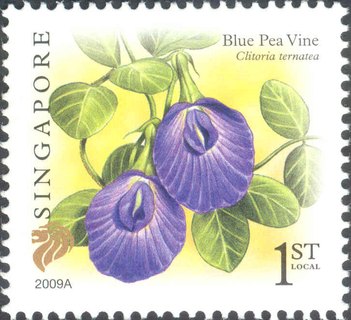
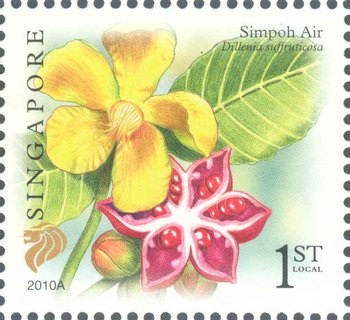
Today more than half the world's population lives in cities, people flock to cities in increasing numbers every year. Singapore's population will continue to grow as well and will become increasingly urbanized. And yet, we know that life in a city can be stressful; but we also know that green spaces, natural areas and plants and wildlife can relieve the stress and improve our quality of life. That is why green spaces, natural areas and wildlife become important. The beautiful plants, birds and mammals featured in this latest set of 14 definitive stamps are just some of the wildlife and plants found in Singapore.
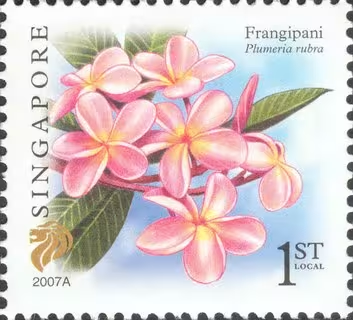
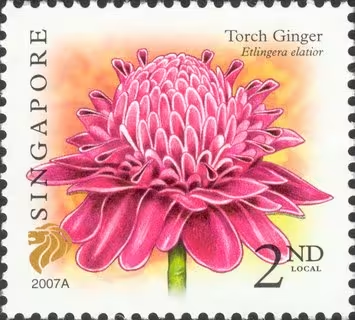
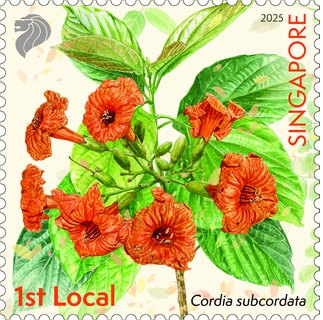
The set of two no-value indicator (NVI) stamps spot the pretty Frangipanni, Plumeria rubra (1st Local) and the Torch Ginger, Etlingera elatior (2nd Local). The Frangipanni, Plumeria rubra (1st Local) needs no introduction as it is commonly used in landscaping in Singapore. It is a prolific flowering plant and its flowers are pleasantly fragrant. The striking flower of the Torch Ginger, Etlingera elatior (2nd Local) is from the Zingiberaceae family. It occurs naturally in rainforests in Malaysia and Indonesia, and unlike the Frangipanni, which can grow on porous, sandy soil, the Torch Ginger requires rich organic soil with plenty of moisture and some shelter and shade.
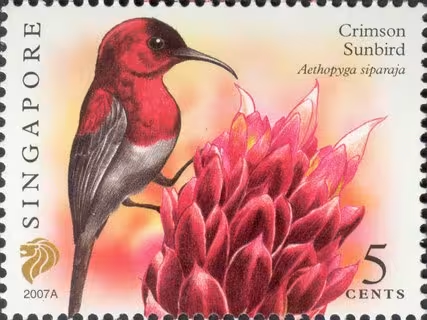
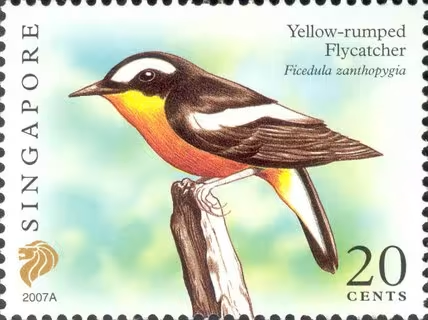
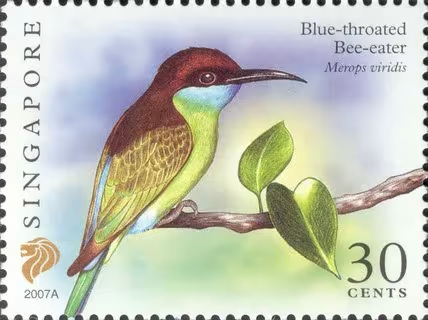
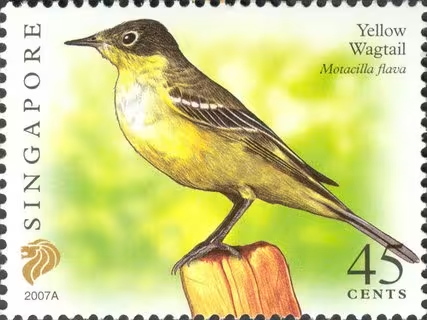
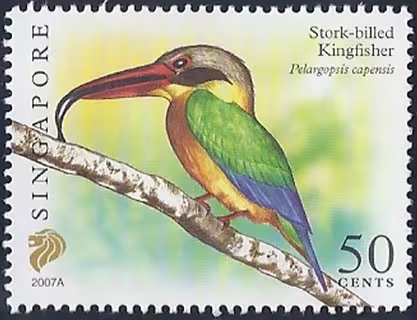
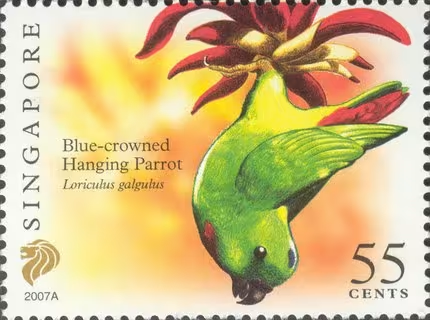
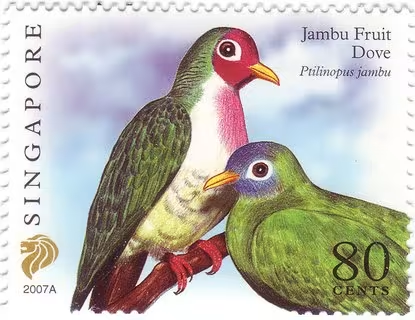
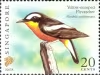
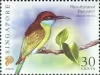
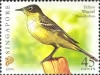
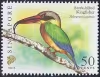
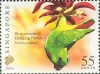
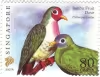
There are more than 350 species of birds in Singapore. In this Definitives series, 8 birds are wonderfully illustrated, namely the Crimson Sunbird (5c), Yellow-rumped Flycatcher (20c), Blue-throated Bee-eater (30c), Yellow Wagtail (45c), Stork-billed Kingfisher (50c), Blue-crowned Hanging Parrot (55c), Common Goldenback (65c) and Jambu Fruit Dove (80c). Each of the eight birds represents a different family, not all are resident, three do not breed in Singapore, but they are Singapore birds all the same. Together this amazing collection of avian diversity and beauty highlights the astonishing range of native birds present in Singapore's tiny 700 km2 territory.
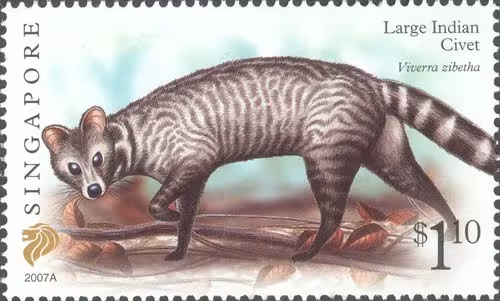
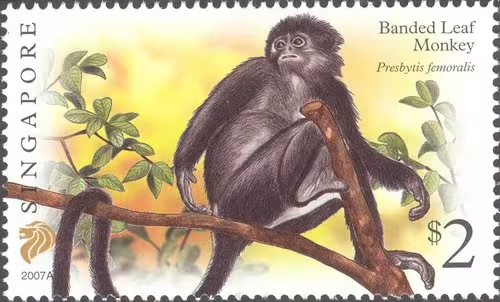
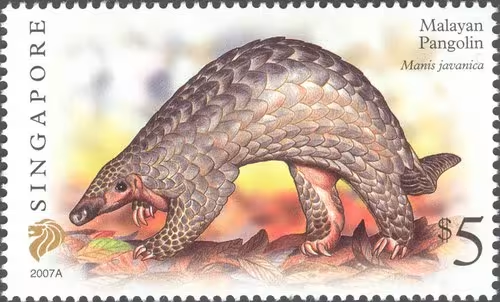
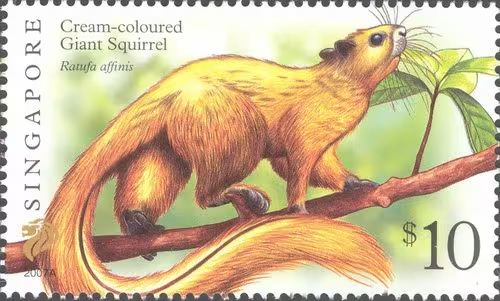
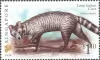
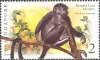
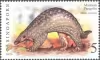
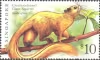
Mammals are regarded as the most highly developed animals in the animal kingdom. All the four species namely the Large Indian Civet ($1.10), the Banded Leaf Monkey ($2), the Malayan Pangolin ($5) and the Cream-coloured Giant Squirrel ($10) in this 2007 stamp series depend on primary rainforest to survive, or at least undisturbed forested areas where they can feed and raise their families. Although few people might actually see these animals in the wild, we enjoy knowing that they are there, that there is still wilderness left in Singapore, where wild animals can live. They are part of our natural heritage; and they made their home on the island long before we did.