Singapore POST

Local Fruits

Issue date 26 Feb 1986

Overview

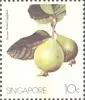
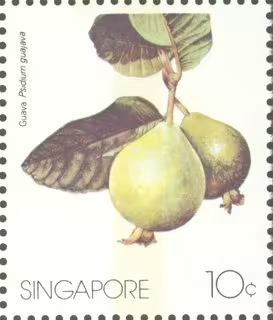
GUAVA Psidium guajava 10¢ The guava originated in the American tropics and is widely cultivated in all tropical countries now. The guava does best in warm conditions with high air temperatures and can tolerate a wide range of soil conditions. The guava tree is propagated by marcotting and grafting. and grows into a small shrub or spreading tree of about 10 metres high. The flowers are white in colour. Fruits vary in size and there are cultivars with white, cream, apricot, pink or red coloured flesh. Seeds are small, hard and heart-shaped. Fruits may be eaten fresh, or used in dessert or drinks. Guava fruit is a rich source of Vitamin C

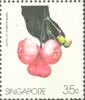
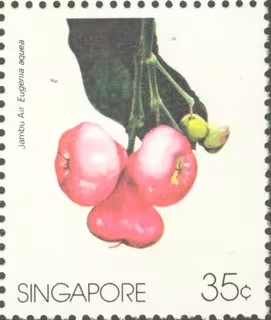
JAMBU AIR Eugenia aquea 35¢ Jambu Air is a native of India. It is a small, low-spreading tree of 5-8 metres high. Leaves are large. Flowers are slightly scented, white or occasionally pinkish The fruits have an uneven shape, with wide apex and a narrow base. The colour of the fruit vanes between white and bright pink. Jambu Air is propagated by marcotting. It has been in cultivation for many centuries

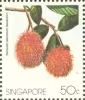
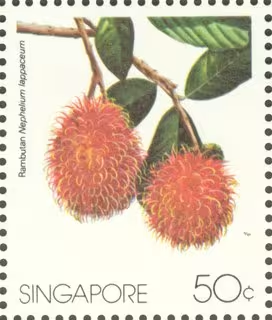
RAMBUTAN Nephelium lappaceum 50 The rambutan tree was first brought to Singapore from Malaysia. It is now widely cultivated in the tropics, growing best in well-drained soils. The trees are propagated by budding and marcotting and reach heights of about 20 metres. The flowers of the rambutan tree are small and greenish white, and are borne in attractive panicles on the outer canopy of the tree. The fruits grow in clusters and are available twice a year. Each fruit is single-seeded, succulent and is covered by a distinctive hairy skin whose colour range from yellow, orange, red to scarlet. The fruits are eaten fresh and are sometimes canned for export.

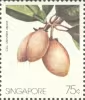
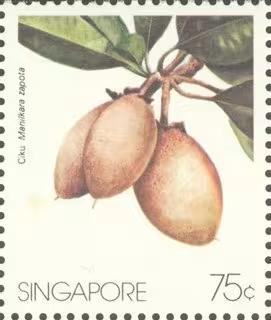
CIKU Manilkara zapota 75¢ The Ciku was native to Central Americа and is now widely cultivated throughout the tropics. It grows best in well drained soils. Propagation is by marcotting and inarching. Pyramidal when young, it grows to a full height of 5-15 metres. The leaves are simple and flowers are small and white. The fruit is round to oval in shape and the flesh is yellowish to pinkish brown, with a number of hard black shiny seeds. Sweet to the taste, the Ciku is eaten fresh as a dessert fruit.
Local Fruits
Local Fruits
Local Fruits
Local Fruits
Technical specifications
Denomination10¢, 35¢, 50¢, 75¢
Stamp Size26.8mm x 31.8mm
Perforation14.0
PrintingLithography
Sheet Content50 stamps per sheet
PrinterWaddingtons
Graphic DesignerPoh Siew Wah
Singapore POST
Singapore POST
Singapore POST
Singapore POST

Local Fruits

Issue date 26 Feb 1986

GUAVA Psidium guajava 10¢ The guava originated in the American tropics and is widely cultivated in all tropical countries now. The guava does best in warm conditions with high air temperatures and can tolerate a wide range of soil conditions. The guava tree is propagated by marcotting and grafting. and grows into a small shrub or spreading tree of about 10 metres high. The flowers are white in colour. Fruits vary in size and there are cultivars with white, cream, apricot, pink or red coloured flesh. Seeds are small, hard and heart-shaped. Fruits may be eaten fresh, or used in dessert or drinks. Guava fruit is a rich source of Vitamin C

JAMBU AIR Eugenia aquea 35¢ Jambu Air is a native of India. It is a small, low-spreading tree of 5-8 metres high. Leaves are large. Flowers are slightly scented, white or occasionally pinkish The fruits have an uneven shape, with wide apex and a narrow base. The colour of the fruit vanes between white and bright pink. Jambu Air is propagated by marcotting. It has been in cultivation for many centuries

RAMBUTAN Nephelium lappaceum 50 The rambutan tree was first brought to Singapore from Malaysia. It is now widely cultivated in the tropics, growing best in well-drained soils. The trees are propagated by budding and marcotting and reach heights of about 20 metres. The flowers of the rambutan tree are small and greenish white, and are borne in attractive panicles on the outer canopy of the tree. The fruits grow in clusters and are available twice a year. Each fruit is single-seeded, succulent and is covered by a distinctive hairy skin whose colour range from yellow, orange, red to scarlet. The fruits are eaten fresh and are sometimes canned for export.

CIKU Manilkara zapota 75¢ The Ciku was native to Central Americа and is now widely cultivated throughout the tropics. It grows best in well drained soils. Propagation is by marcotting and inarching. Pyramidal when young, it grows to a full height of 5-15 metres. The leaves are simple and flowers are small and white. The fruit is round to oval in shape and the flesh is yellowish to pinkish brown, with a number of hard black shiny seeds. Sweet to the taste, the Ciku is eaten fresh as a dessert fruit.
Denomination

10¢, 35¢, 50¢, 75¢

Stamp Size

26.8mm x 31.8mm

Perforation

14.0

Printing

Lithography

Sheet Content

50 stamps per sheet

Printer

Waddingtons

Graphic Designer

Poh Siew Wah

Local Fruits

Issue date 26 Feb 1986

Local FruitsLocal FruitsLocal FruitsLocal Fruits

Overview

GUAVA Psidium guajava 10¢ The guava originated in the American tropics and is widely cultivated in all tropical countries now. The guava does best in warm conditions with high air temperatures and can tolerate a wide range of soil conditions. The guava tree is propagated by marcotting and grafting. and grows into a small shrub or spreading tree of about 10 metres high. The flowers are white in colour. Fruits vary in size and there are cultivars with white, cream, apricot, pink or red coloured flesh. Seeds are small, hard and heart-shaped. Fruits may be eaten fresh, or used in dessert or drinks. Guava fruit is a rich source of Vitamin C

JAMBU AIR Eugenia aquea 35¢ Jambu Air is a native of India. It is a small, low-spreading tree of 5-8 metres high. Leaves are large. Flowers are slightly scented, white or occasionally pinkish The fruits have an uneven shape, with wide apex and a narrow base. The colour of the fruit vanes between white and bright pink. Jambu Air is propagated by marcotting. It has been in cultivation for many centuries

RAMBUTAN Nephelium lappaceum 50 The rambutan tree was first brought to Singapore from Malaysia. It is now widely cultivated in the tropics, growing best in well-drained soils. The trees are propagated by budding and marcotting and reach heights of about 20 metres. The flowers of the rambutan tree are small and greenish white, and are borne in attractive panicles on the outer canopy of the tree. The fruits grow in clusters and are available twice a year. Each fruit is single-seeded, succulent and is covered by a distinctive hairy skin whose colour range from yellow, orange, red to scarlet. The fruits are eaten fresh and are sometimes canned for export.

CIKU Manilkara zapota 75¢ The Ciku was native to Central Americа and is now widely cultivated throughout the tropics. It grows best in well drained soils. Propagation is by marcotting and inarching. Pyramidal when young, it grows to a full height of 5-15 metres. The leaves are simple and flowers are small and white. The fruit is round to oval in shape and the flesh is yellowish to pinkish brown, with a number of hard black shiny seeds. Sweet to the taste, the Ciku is eaten fresh as a dessert fruit.
Technical specifications

Denomination10¢, 35¢, 50¢, 75¢
Stamp Size26.8mm x 31.8mm
Perforation14.0
PrintingLithography
Sheet Content50 stamps per sheet
PrinterWaddingtons
Graphic DesignerPoh Siew Wah
Subscribe to newsletter

Stay updated

Subscribe to our newsletter for the latest stamp releases, behind-the-scenes features, and exclusive stories from the vibrant world of philately.