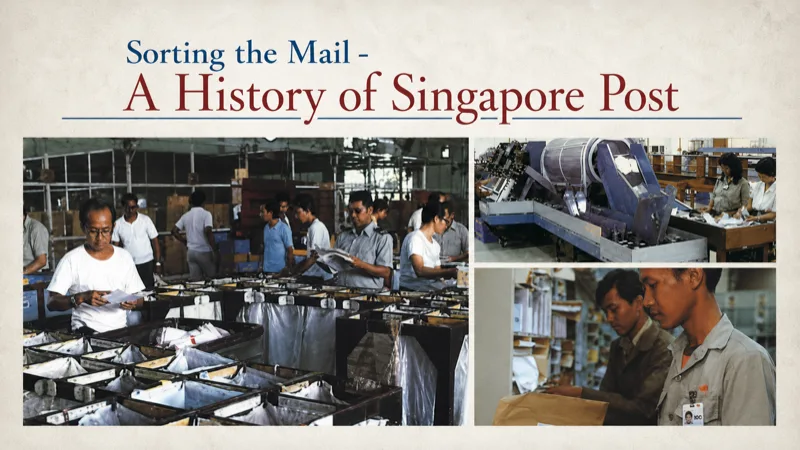
Since the first settlers, mail has been an important part of life in Singapore. The arrival of mail in the early days was announced with a flag hoist on Government Hill. The actual delivery of the mail has changed little, but the quantity has increased dramatically. The history of Singapore Post has been one of continuous improvement and automation in sorting the mail before it goes into the postman's bag.
Last month, Singapore Post moved its mail sorting operations from Chai Chee to a $380 million purpose-built complex at Eunos Road 8. With a floor space of 63,000 m2, the new Singapore Post Centre is three times larger than Chai Chee. It can process 60% more mail - sufficient to meet expected growth until at least the year 2010.
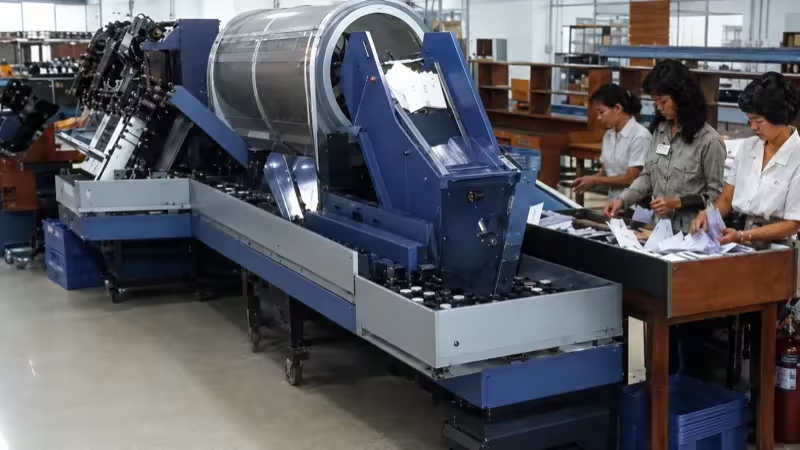
The complex has a $95 million automated sorting system developed and manufactured by Siemens. "With this system, customers may receive their mail one to two hours earlier," said Mr William Tan, SingPost's Chief Executive.
"This investment will not immediately push up postage rates."
Today SingPost handles about two million mail items every day. In the last five years, mail volume has been growing at six to eight per cent a year and by 2010, volume will probably double to four million items per day.
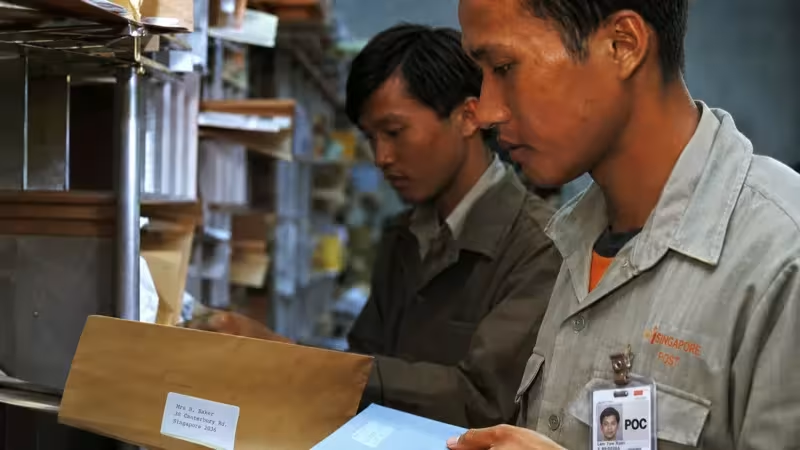
Changes in the mail
"We are not only seeing a change in numbers but the size and shape of mail items," said Mr Woo Keng Leong, SingPost's Director for mail business. "Ten years ago, letters and parcels formed the bulk. Today, it includes periodicals, catalogues and promotional material."
All local and overseas mail is sorted at the mail processing centre and delivered by postmen - each carrying about 2000 items on their rounds each day.
With the growing volume, SingPost would have to hire another 500 postmen by 2010 if there was no further automation of mail sorting.
Under the current system, mail is sorted according to sectors, or the first two-digits of the postal code. It is then sent to 14 delivery points where each postman spends up to two hours sorting his mail into the order he will deliver it.
The new system does away with this step and by November this year, postmen will pick up their mail from their delivery bases and go straight off on their rounds.
The Singapore Post Centre will be the fourth mail processing centre in Singapore's postal history.
Fullerton Building
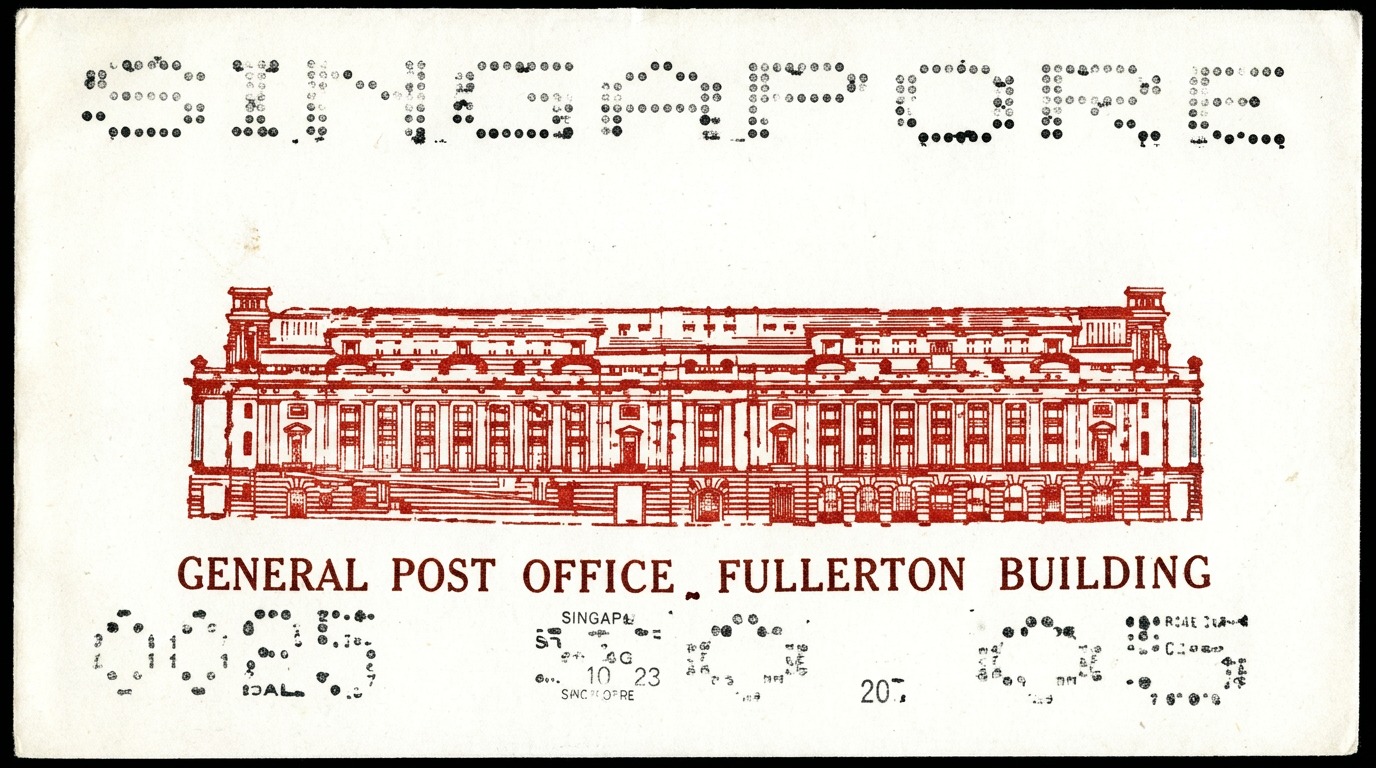
The GPO at Fullerton Building was the first. The basement was used for parcel sorting and strongrooms, while the main floor was used for sorting letters and the telegram room.
There was already some form of automation in 1928. Letters dropped into the post-box would automatically fall to the basement and onto a band conveyor which took them to the sorting room.
Got stuck in the belts
There they were shot onto a sorting table, stamped and then routed through the sorting room, ready for dispatch. The system was dropped in the 1950s because letters often got stuck in the conveyor belt.
A subway was also constructed underneath Fullerton Road connecting the GPO to the pier for mail brought in by ships. The subway was closed when mail sorting was moved to Nelson Road.
The processing centre at Nelson Road handled all the mail from 1971 to 1983.
A mail processing centre in a Port of Singapore Authority warehouse on Nelson Road was opened in 1971.
It was here that mechanization of mail processing was introduced. Only five machines were acquired then.
An automatic culler-facer-canceller machine and a semi-automatic facer-canceller machine were both used for stamp cancellation and stacking.
A desk-connected letter sorting machine was used to sort mail collected. Two high-speed stamp cancelling machines came later.
Conditions in Nelson Road were far from favourable. There was no air-conditioning and lighting was bad. So it was a relief for the staff when they moved to the new centre in Chai Chee in 1983.
Chai Chee Industrial Park
SingPost was able to introduce more automation in Chai Chee. The centre could sort and deliver an average of 600 million letters and parcels a year.
"The Chai Chee Complex was the former Rollei factory which produced cameras. It was not ideal for mail processing," said Mr Woo.
"We remodelled and put in special platforms to meet our needs. In spite of this, as mail volumes continue to increase, fully automated machines are required. We now need a purpose-built complex."
The first postal code
To simplify mail-sorting, a two-digit postal code was introduced in 1950. Singapore was divided into 28 postal districts, each represented by a code.
As mail volume grew, the 28 districts were subdivided into 81 postal sectors. This heralded the changeover to four-digit postal codes in 1979.
However, as Singapore continued to grow, the four-digit system was found to be insufficient to cope with the number of delivery points. It could only generate 10,000 codes.
In September 1995, SingPost announced the new 6-digit postal code that will allow mail to be sorted automatically according to delivery sequence for every postman.
Each six-digit code identifies a specific delivery point, either a house or a building. For example, for postal code 760433, '76' gives the sector, and '0433' identifies the building.
When the new codes were announced, letters and leaflets explaining the change, and free directories, were sent to every address in town.
Public education was important, as the new system could not be fully utilized if mail continued to carry the old postal code.
The publicity programme worked. "About 96% of the mail now carries the new codes," said Mr Woo.
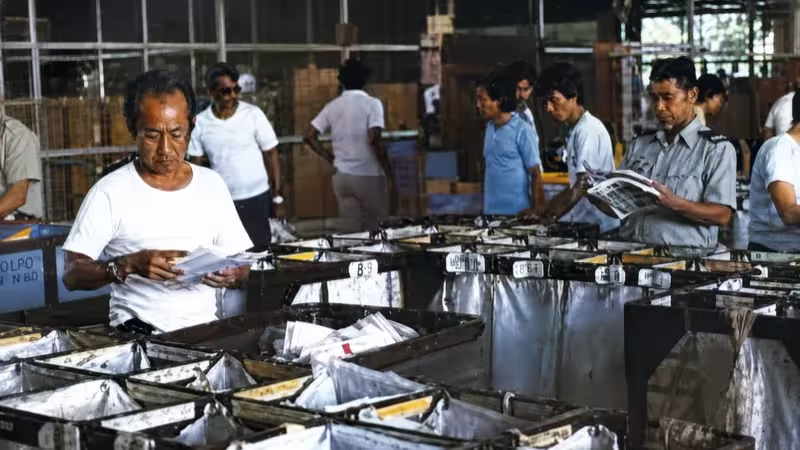
Next day delivery
"With this new system, we are able to maintain next day deliveries, despite the growing volume."
Today, there are more than 120,000 delivery points or buildings. Given the fact the six-digit postal code system is capable of generating one million postal codes, it looks set to be around for the next 20 years at least!
This is an extract of an article from Keylines, a publication for customers of the SingTel Group.