Singapore POST

Cash Crops of Early Singapore

Issue date 12 Nov 2008

Overview

When Sir Stamford Raffles established the first Botanic Gardens in 1822, located on the slopes of Government Hill (now known as Fort Canning Hill), its purpose then was for experimental cultivation of plants, such as nutmeg and clove, to evaluate their economic value and suitability as Cash Crops (crops that are grown for money) as well as other tropical plants.

Beautifully illustrated in this set of stamps are the commonly found cash crops in the early days in Singapore, namely:

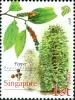
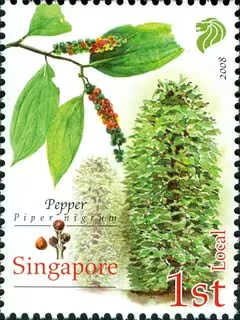
Pepper (1st Local) - a perennial root climber and often grows on posts, the fruit is ground and used in powdered form and widely used as condiment, with the flavor and pungency blending well with most savoury dishes.

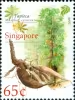
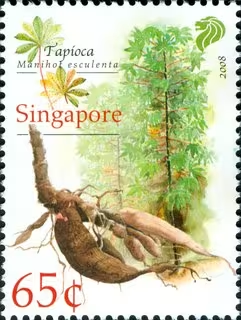
Tapioca (65c) - easiest to grow, is an important famine crop as not much attention is needed on the plant and it can grow in poor soil and withstand drought. It is the huge storage root of the plant that is eaten especially through the times of the Japanese Occupation.

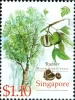
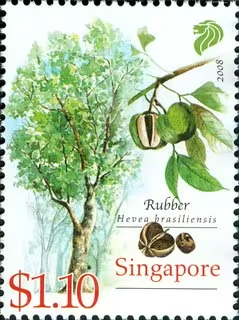
Rubber ($1.10) - a huge contributor to Singapore's trade and commerce in the early days through the extensive importing and exporting of rubber products. In the 1930s, more than one quarter of the workforce was engaged in the Rubber industry.

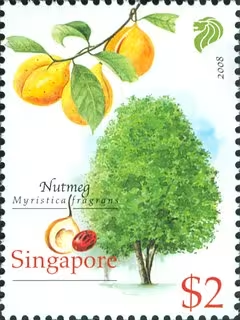
Nutmeg ($2) - used medicinally and is said to have stimulative, carminative, astringent and aphrodisiac properties. Nutmeg cultivation was undoubtedly a part of Singapore's history with roads named after itself.
Cash Crops of Early Singapore
Technical specifications
Denomination1st Local, 65¢, $1.10, $2
Stamp Size30mm x 40mm
Perforation13.33 x 13.60
Paperunwatermarked
PrintingOffset Lithography
Sheet Content10 stamps per sheet
PrinterSouthern Colour Print
Graphic DesignerLeo Teck Chong
Singapore POST
Singapore POST
Singapore POST
Singapore POST

Cash Crops of Early Singapore

Issue date 12 Nov 2008

When Sir Stamford Raffles established the first Botanic Gardens in 1822, located on the slopes of Government Hill (now known as Fort Canning Hill), its purpose then was for experimental cultivation of plants, such as nutmeg and clove, to evaluate their economic value and suitability as Cash Crops (crops that are grown for money) as well as other tropical plants.

Beautifully illustrated in this set of stamps are the commonly found cash crops in the early days in Singapore, namely:

Pepper (1st Local) - a perennial root climber and often grows on posts, the fruit is ground and used in powdered form and widely used as condiment, with the flavor and pungency blending well with most savoury dishes.

Tapioca (65c) - easiest to grow, is an important famine crop as not much attention is needed on the plant and it can grow in poor soil and withstand drought. It is the huge storage root of the plant that is eaten especially through the times of the Japanese Occupation.

Rubber ($1.10) - a huge contributor to Singapore's trade and commerce in the early days through the extensive importing and exporting of rubber products. In the 1930s, more than one quarter of the workforce was engaged in the Rubber industry.

Nutmeg ($2) - used medicinally and is said to have stimulative, carminative, astringent and aphrodisiac properties. Nutmeg cultivation was undoubtedly a part of Singapore's history with roads named after itself.
Denomination

1st Local, 65¢, $1.10, $2

Stamp Size

30mm x 40mm

Perforation

13.33 x 13.60

Paper

unwatermarked

Printing

Offset Lithography

Sheet Content

10 stamps per sheet

Printer

Southern Colour Print

Graphic Designer

Leo Teck Chong

Cash Crops of Early Singapore

Issue date 12 Nov 2008

Cash Crops of Early SingaporeCash Crops of Early SingaporeCash Crops of Early SingaporeCash Crops of Early Singapore

Overview

When Sir Stamford Raffles established the first Botanic Gardens in 1822, located on the slopes of Government Hill (now known as Fort Canning Hill), its purpose then was for experimental cultivation of plants, such as nutmeg and clove, to evaluate their economic value and suitability as Cash Crops (crops that are grown for money) as well as other tropical plants.

Beautifully illustrated in this set of stamps are the commonly found cash crops in the early days in Singapore, namely:

Pepper (1st Local) - a perennial root climber and often grows on posts, the fruit is ground and used in powdered form and widely used as condiment, with the flavor and pungency blending well with most savoury dishes.

Tapioca (65c) - easiest to grow, is an important famine crop as not much attention is needed on the plant and it can grow in poor soil and withstand drought. It is the huge storage root of the plant that is eaten especially through the times of the Japanese Occupation.

Rubber ($1.10) - a huge contributor to Singapore's trade and commerce in the early days through the extensive importing and exporting of rubber products. In the 1930s, more than one quarter of the workforce was engaged in the Rubber industry.

Nutmeg ($2) - used medicinally and is said to have stimulative, carminative, astringent and aphrodisiac properties. Nutmeg cultivation was undoubtedly a part of Singapore's history with roads named after itself.
Technical specifications

Denomination1st Local, 65¢, $1.10, $2
Stamp Size30mm x 40mm
Perforation13.33 x 13.60
Paperunwatermarked
PrintingOffset Lithography
Sheet Content10 stamps per sheet
PrinterSouthern Colour Print
Graphic DesignerLeo Teck Chong
Subscribe to newsletter

Stay updated

Subscribe to our newsletter for the latest stamp releases, behind-the-scenes features, and exclusive stories from the vibrant world of philately.