Overview
EXPO '86 will be one of the greatest attractions the world is likely to see in this decade and millions of people of every age and interest are expected to visit the grounds in Vancouver, British Columbia, Canada between 2 May and 13 October 1986.
EXPO '86 will also be the largest special category World Exposition ever staged in North America and the first to focus on the latest innovations in transportation and communications. It will attempt to seek new ways to overcome the barriers of time and space, new methods of moving people, goods and ideas.
With the theme of "World in Motion - World in Touch", EXPO '86 will offer a glimpse of both the marvels of modern technology and the re-enactments of past travels. In conjunction with the World Exposition, a set of three stamps will be issued on 2 May 86.
Interwoven into the fabric of Singapore's modern city life and highly sophisticated industries is a surprising myriad of traditional trades and handicrafts which have thrived in the little corners of Singapore for a few decades.
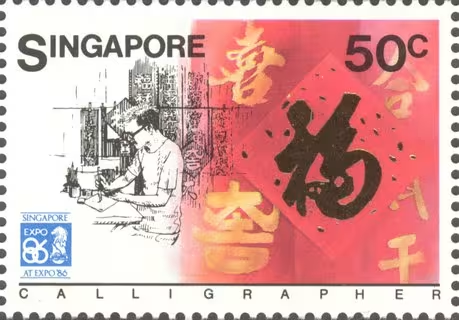
Depicted on the 50¢ stamp is calligraphy, which is the skill of Chinese handwriting. Using the supple Chinese writing brush and paper, the calligrapher transposes the ideographic Chinese character into pieces of art, each in its distinctive beauty, grace and style. Calligraphy is a traditional art, coming from a time when a good hand is equated with good education. Lines and strokes cannot be corrected once they are written.
In Singapore, calligraphers can be found in Chinatown. Their history started from those early days when letter writers were needed as links of family communication for young men who come to make their homes in Singapore. Today, they write poems, couplets, names and even greetings as souvenirs for both tourists and locals alike.
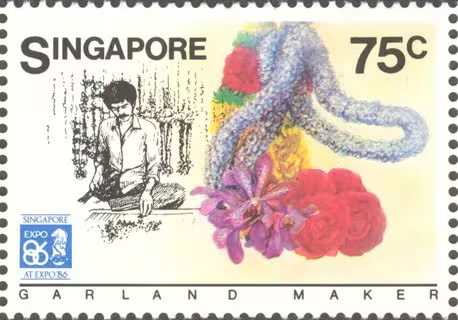
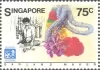
Garland makers (as depicted on the 75¢ stamp) are found along the stretch of Serangoon Road, affectionately known as the "Little India" of Singapore. The art originated from India, and has evolved somewhat to meet the needs of other ethnic communities in Singapore.
Originally using the jasmine blossom, garland makers in Singapore today make use of red and pink roses and orchids to string their garlands together.
As with the traditional crafts, the trade of garland making goes back a few decades. The skill is a relatively simple one using strips of banana fibre to tie the stems of flowers together, forming an attractive floral string. A variety of flowers is used, the most common being the jasmine blossom, chosen for its sweet scent and used in Hindu religious ceremonies. Garlands are also made for use as women's hair pieces, in ritual baths and at wedding and engagement ceremonies.
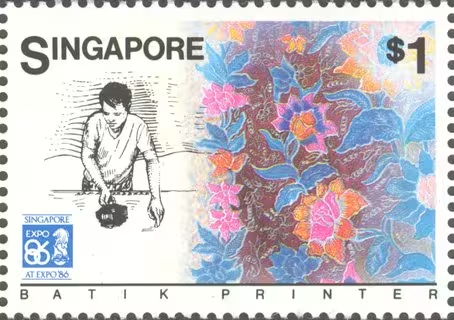
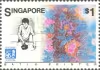
Batik printing (on the $1 stamp) in Singapore had its origin from the neighbouring countries of Indonesia and Malaysia. There are three methods of making batik - hand-painted, hand-stamped and machine printed. In its original form, batik printing is an ornate skill, using a tedious wax and dye process to work out rich patterns and designs on cloth, producing unique masterpieces, often without duplicate.
Batik in Singapore is produced largely for exports. The designs in Singapore batiks tend to centre on the floral theme and are intricate and fine. They are printed on a variety of fabric materials such as cotton, silk and rayon, and are fashioned into wrap-around skirts, sundresses, shirts, blouses and, of course, the striking traditional sarong worn by ladies.