Singapore POST

National Museum Centenary

Issue date 12 Oct 1987

Overview

The idea of a museum in Singapore was conceived in 1823 by Sir Stamford Raffles, the founder of modern Singapore. In the same year, the Raffles Library and Museum was established and housed in the Singapore Institution (later known as Raffles Institution) at the site where Raffles City now stands. The Library was fully operational but the Museum was still to be formed.

Interest in the Museum was rekindled with the donation of two gold coins by the Temenggong of Johore in 1849. However, it was not until 1887 that the Museum was born with the opening of a new building with proper exhibition rooms and a full-time professional staff.

Soon the Museum became a renowned centre for zoological and natural history exhibits and research. At the same time, the ethnological collections were expanded. To accommodate the growing collections, various extensions which constituted the present rear block were carried out in 1904, 1916, 1926 and 1934.

After Singapore's independence, the Raffles Museum was renamed the National Museum of Singapore in 1960. As a National Museum, it searched for a new identity while it was passed from the Ministry of Culture to the Ministry of Science and Technology and back to the Ministry of Culture again in 1972. It was finally decided that it was to be a historical, ethnological and art museum of Singapore and Southeast Asia. Consequently, the zoological and natural history collections were transferred to the Singapore Zoology and Science Department.

In 1976, the Art Gallery was opened, displaying some of the finest works of local and regional artists. Just as the role of the National Museum is the repository for the nation's cultural heritage, the Art Gallery has a similar role to play in the field of art.

The Museum moved into another phase of development in 1984 when it was closed for renovation. After a year, the Museum was reopened with new galleries comprising the History of Singapore Gallery, the Straits Chinese Gallery, the Jade Gallery, the Trade Ceramics Gallery, Southeast Asian Gallery, a Young People's Gallery for children and an Audio-Visual Theatrette.

The National Museum is responsible for preserving, documenting and making our national heritage accessible to the public. It promotes an understanding and appreciation of our heritage. As it celebrates its 100th year this year, the Museum is poised to move into the next century with greater vibrancy.

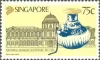
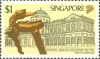
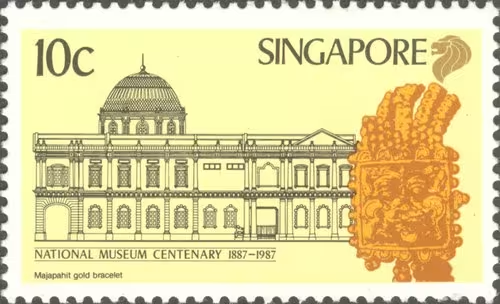
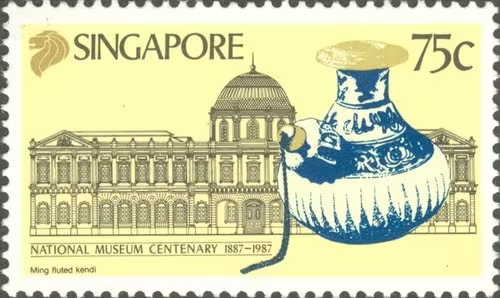
Shown on the set of stamps issued to mark the 100 years of National Museum are some of the highlights of the Museum's collections against the line-drawing background of the Museum building.

The 10 cents stamp shows the Majapahit gold bracelet, one of the rare archaeological clues to Singapore's ancient past in the mid-14th and 15th centuries.

Depicted on the 75 cents stamp is the Ming fluted kendi, an interesting blue-and-white water vessel with designs which are influenced by Buddhist, Hindu and Islamic art.

The Patani hulu pekakak keris, a keris with 17 waves and silver hilt and sheath is found on the $1 stamp. The Arabic inscription on the blade reads: "Sultan Abdul Jalil Sanat 1689 A.D. Thursday Morning 15 October".
National Museum Centenary
Technical specifications
Denomination10¢, 75¢, $1
Stamp Size43.5mm x 26.0mm
Perforation13½
PrintingLithography
Sheet Content50 stamps per sheet
PrinterSecura Singapore Pte Ltd
Graphic DesignerMelvin Ng Puay Chiew
Singapore POST
Singapore POST
Singapore POST

National Museum Centenary

Issue date 12 Oct 1987

The idea of a museum in Singapore was conceived in 1823 by Sir Stamford Raffles, the founder of modern Singapore. In the same year, the Raffles Library and Museum was established and housed in the Singapore Institution (later known as Raffles Institution) at the site where Raffles City now stands. The Library was fully operational but the Museum was still to be formed.

Interest in the Museum was rekindled with the donation of two gold coins by the Temenggong of Johore in 1849. However, it was not until 1887 that the Museum was born with the opening of a new building with proper exhibition rooms and a full-time professional staff.

Soon the Museum became a renowned centre for zoological and natural history exhibits and research. At the same time, the ethnological collections were expanded. To accommodate the growing collections, various extensions which constituted the present rear block were carried out in 1904, 1916, 1926 and 1934.

After Singapore's independence, the Raffles Museum was renamed the National Museum of Singapore in 1960. As a National Museum, it searched for a new identity while it was passed from the Ministry of Culture to the Ministry of Science and Technology and back to the Ministry of Culture again in 1972. It was finally decided that it was to be a historical, ethnological and art museum of Singapore and Southeast Asia. Consequently, the zoological and natural history collections were transferred to the Singapore Zoology and Science Department.

In 1976, the Art Gallery was opened, displaying some of the finest works of local and regional artists. Just as the role of the National Museum is the repository for the nation's cultural heritage, the Art Gallery has a similar role to play in the field of art.

The Museum moved into another phase of development in 1984 when it was closed for renovation. After a year, the Museum was reopened with new galleries comprising the History of Singapore Gallery, the Straits Chinese Gallery, the Jade Gallery, the Trade Ceramics Gallery, Southeast Asian Gallery, a Young People's Gallery for children and an Audio-Visual Theatrette.

The National Museum is responsible for preserving, documenting and making our national heritage accessible to the public. It promotes an understanding and appreciation of our heritage. As it celebrates its 100th year this year, the Museum is poised to move into the next century with greater vibrancy.

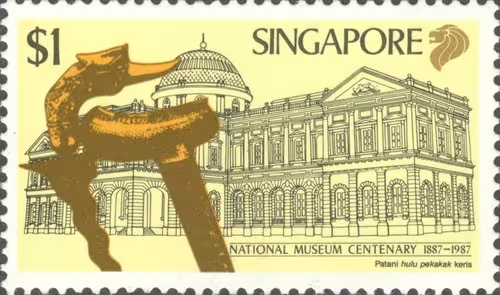
Shown on the set of stamps issued to mark the 100 years of National Museum are some of the highlights of the Museum's collections against the line-drawing background of the Museum building.

The 10 cents stamp shows the Majapahit gold bracelet, one of the rare archaeological clues to Singapore's ancient past in the mid-14th and 15th centuries.

Depicted on the 75 cents stamp is the Ming fluted kendi, an interesting blue-and-white water vessel with designs which are influenced by Buddhist, Hindu and Islamic art.

The Patani hulu pekakak keris, a keris with 17 waves and silver hilt and sheath is found on the $1 stamp. The Arabic inscription on the blade reads: "Sultan Abdul Jalil Sanat 1689 A.D. Thursday Morning 15 October".
Denomination

10¢, 75¢, $1

Stamp Size

43.5mm x 26.0mm

Perforation

13½

Printing

Lithography

Sheet Content

50 stamps per sheet

Printer

Secura Singapore Pte Ltd

Graphic Designer

Melvin Ng Puay Chiew

National Museum Centenary

Issue date 12 Oct 1987

National Museum CentenaryNational Museum CentenaryNational Museum Centenary

Overview

The idea of a museum in Singapore was conceived in 1823 by Sir Stamford Raffles, the founder of modern Singapore. In the same year, the Raffles Library and Museum was established and housed in the Singapore Institution (later known as Raffles Institution) at the site where Raffles City now stands. The Library was fully operational but the Museum was still to be formed.

Interest in the Museum was rekindled with the donation of two gold coins by the Temenggong of Johore in 1849. However, it was not until 1887 that the Museum was born with the opening of a new building with proper exhibition rooms and a full-time professional staff.

Soon the Museum became a renowned centre for zoological and natural history exhibits and research. At the same time, the ethnological collections were expanded. To accommodate the growing collections, various extensions which constituted the present rear block were carried out in 1904, 1916, 1926 and 1934.

After Singapore's independence, the Raffles Museum was renamed the National Museum of Singapore in 1960. As a National Museum, it searched for a new identity while it was passed from the Ministry of Culture to the Ministry of Science and Technology and back to the Ministry of Culture again in 1972. It was finally decided that it was to be a historical, ethnological and art museum of Singapore and Southeast Asia. Consequently, the zoological and natural history collections were transferred to the Singapore Zoology and Science Department.

In 1976, the Art Gallery was opened, displaying some of the finest works of local and regional artists. Just as the role of the National Museum is the repository for the nation's cultural heritage, the Art Gallery has a similar role to play in the field of art.

The Museum moved into another phase of development in 1984 when it was closed for renovation. After a year, the Museum was reopened with new galleries comprising the History of Singapore Gallery, the Straits Chinese Gallery, the Jade Gallery, the Trade Ceramics Gallery, Southeast Asian Gallery, a Young People's Gallery for children and an Audio-Visual Theatrette.

The National Museum is responsible for preserving, documenting and making our national heritage accessible to the public. It promotes an understanding and appreciation of our heritage. As it celebrates its 100th year this year, the Museum is poised to move into the next century with greater vibrancy.

Shown on the set of stamps issued to mark the 100 years of National Museum are some of the highlights of the Museum's collections against the line-drawing background of the Museum building.

The 10 cents stamp shows the Majapahit gold bracelet, one of the rare archaeological clues to Singapore's ancient past in the mid-14th and 15th centuries.

Depicted on the 75 cents stamp is the Ming fluted kendi, an interesting blue-and-white water vessel with designs which are influenced by Buddhist, Hindu and Islamic art.

The Patani hulu pekakak keris, a keris with 17 waves and silver hilt and sheath is found on the $1 stamp. The Arabic inscription on the blade reads: "Sultan Abdul Jalil Sanat 1689 A.D. Thursday Morning 15 October".
Technical specifications

Denomination10¢, 75¢, $1
Stamp Size43.5mm x 26.0mm
Perforation13½
PrintingLithography
Sheet Content50 stamps per sheet
PrinterSecura Singapore Pte Ltd
Graphic DesignerMelvin Ng Puay Chiew
Subscribe to newsletter

Stay updated

Subscribe to our newsletter for the latest stamp releases, behind-the-scenes features, and exclusive stories from the vibrant world of philately.