Singapore POST

Singapore-Hungary Joint Stamp Issue

Issue date 22 Oct 2020

Overview

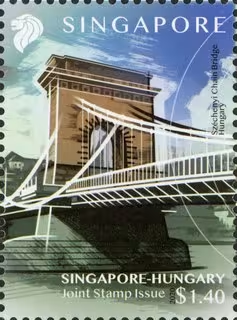
This year marks the 50th anniversary of diplomatic relations between Singapore and Hungary, a significant milestone that both countries have built. Over the years, Singapore and Hungary’s relations have grown from strength to strength with both countries continuing to have warm relationship with good collaborations. To commemorate and celebrate the close bilateral ties of both countries, Singapore Post and Magyar Posta have collaborated to release this joint stamp issue. The theme for this joint stamp issue is “Bridges”. Featured in this joint stamp issue are the Cavenagh Bridge of Singapore and Széchenyi Chain Bridge of Budapest, Hungary.

Cavenagh Bridge

The Cavenagh Bridge is the oldest surviving suspension bridge across the Singapore River. The bridge linked Commercial Square (now Raffles Place) and the government quarter then, and was an essential alternative to reach the General Post Office, replacing the ferry crossing during the early days.

The construction of Cavenagh Bridge started in 1867 and was completed in 1869. The Cavenagh Bridge was named after Sir William O. Cavenagh, the Governor of the Straits Settlements from 1859-1867. The Cavenagh Bridge was said to be designed by George C. Collyer, the Chief Engineer of the Straits Settlement from 1859-1862 and Rowland M. Ordish, a consulting engineer based in London. The project was completed under the supervision of Arthur H. De Wind, the Municipal Engineer from 1863-1871. The Cavenagh Bridge was constructed by steel structure imported from Glasgow by P&W MacLellan and the Cavenagh family coat-of-arms can be seen on the cross-beams at both ends of the steel structure.

Széchenyi Chain Bridge

The Széchenyi Chain Bridge spans the River Danube between the western and eastern sides of Budapest, the capital of Hungary. It was designed by English engineer William Tierney Clark and built by Scottish engineer Adam Clark. The bridge bears the name of István Széchenyi, the major supporter of its construction.

Opened in 1849, it was the first permanent bridge in the Hungarian capital. At the time, its centre span of 202 metres (663 ft) was one of the largest in the world. Its decorations are made of cast iron and two stone lion statues, installed in 1852, guard both bridgeheads. The bridge's cast-iron structure was updated and strengthened in 1914. In World War II, the bridge was blown up during the Siege of Budapest, with only the towers remaining. It was rebuilt, and reopened in 1949.


Singapore-Hungary Joint Stamp Issue
Technical specifications
Denomination$1.40 x 2 designs
Stamp Size29.85mm x 40.8mm
Miniature Sheet Size120mm x 80mm
Perforation13.0
Paperunwatermarked
PrintingOffset Lithography
Sheet Content10 stamps per sheet
PrinterSecura Singapore Pte Ltd
Graphic DesignerMr. Imre Benedek (Hungary)
Singapore POST
Singapore POST
Singapore POST

Singapore-Hungary Joint Stamp Issue

Issue date 22 Oct 2020

This year marks the 50th anniversary of diplomatic relations between Singapore and Hungary, a significant milestone that both countries have built. Over the years, Singapore and Hungary’s relations have grown from strength to strength with both countries continuing to have warm relationship with good collaborations. To commemorate and celebrate the close bilateral ties of both countries, Singapore Post and Magyar Posta have collaborated to release this joint stamp issue. The theme for this joint stamp issue is “Bridges”. Featured in this joint stamp issue are the Cavenagh Bridge of Singapore and Széchenyi Chain Bridge of Budapest, Hungary.

Cavenagh Bridge

The Cavenagh Bridge is the oldest surviving suspension bridge across the Singapore River. The bridge linked Commercial Square (now Raffles Place) and the government quarter then, and was an essential alternative to reach the General Post Office, replacing the ferry crossing during the early days.

The construction of Cavenagh Bridge started in 1867 and was completed in 1869. The Cavenagh Bridge was named after Sir William O. Cavenagh, the Governor of the Straits Settlements from 1859-1867. The Cavenagh Bridge was said to be designed by George C. Collyer, the Chief Engineer of the Straits Settlement from 1859-1862 and Rowland M. Ordish, a consulting engineer based in London. The project was completed under the supervision of Arthur H. De Wind, the Municipal Engineer from 1863-1871. The Cavenagh Bridge was constructed by steel structure imported from Glasgow by P&W MacLellan and the Cavenagh family coat-of-arms can be seen on the cross-beams at both ends of the steel structure.

Széchenyi Chain Bridge

The Széchenyi Chain Bridge spans the River Danube between the western and eastern sides of Budapest, the capital of Hungary. It was designed by English engineer William Tierney Clark and built by Scottish engineer Adam Clark. The bridge bears the name of István Széchenyi, the major supporter of its construction.

Opened in 1849, it was the first permanent bridge in the Hungarian capital. At the time, its centre span of 202 metres (663 ft) was one of the largest in the world. Its decorations are made of cast iron and two stone lion statues, installed in 1852, guard both bridgeheads. The bridge's cast-iron structure was updated and strengthened in 1914. In World War II, the bridge was blown up during the Siege of Budapest, with only the towers remaining. It was rebuilt, and reopened in 1949.
Denomination

$1.40 x 2 designs

Stamp Size

29.85mm x 40.8mm

Miniature Sheet Size

120mm x 80mm

Perforation

13.0

Paper

unwatermarked

Printing

Offset Lithography

Sheet Content

10 stamps per sheet

Printer

Secura Singapore Pte Ltd

Graphic Designer

Mr. Imre Benedek (Hungary)

Singapore-Hungary Joint Stamp Issue

Issue date 22 Oct 2020

Singapore-Hungary Joint Stamp IssueSingapore-Hungary Joint Stamp IssueSingapore-Hungary Joint Stamp Issue

Overview

This year marks the 50th anniversary of diplomatic relations between Singapore and Hungary, a significant milestone that both countries have built. Over the years, Singapore and Hungary’s relations have grown from strength to strength with both countries continuing to have warm relationship with good collaborations. To commemorate and celebrate the close bilateral ties of both countries, Singapore Post and Magyar Posta have collaborated to release this joint stamp issue. The theme for this joint stamp issue is “Bridges”. Featured in this joint stamp issue are the Cavenagh Bridge of Singapore and Széchenyi Chain Bridge of Budapest, Hungary.

Cavenagh Bridge

The Cavenagh Bridge is the oldest surviving suspension bridge across the Singapore River. The bridge linked Commercial Square (now Raffles Place) and the government quarter then, and was an essential alternative to reach the General Post Office, replacing the ferry crossing during the early days.

The construction of Cavenagh Bridge started in 1867 and was completed in 1869. The Cavenagh Bridge was named after Sir William O. Cavenagh, the Governor of the Straits Settlements from 1859-1867. The Cavenagh Bridge was said to be designed by George C. Collyer, the Chief Engineer of the Straits Settlement from 1859-1862 and Rowland M. Ordish, a consulting engineer based in London. The project was completed under the supervision of Arthur H. De Wind, the Municipal Engineer from 1863-1871. The Cavenagh Bridge was constructed by steel structure imported from Glasgow by P&W MacLellan and the Cavenagh family coat-of-arms can be seen on the cross-beams at both ends of the steel structure.

Széchenyi Chain Bridge

The Széchenyi Chain Bridge spans the River Danube between the western and eastern sides of Budapest, the capital of Hungary. It was designed by English engineer William Tierney Clark and built by Scottish engineer Adam Clark. The bridge bears the name of István Széchenyi, the major supporter of its construction.

Opened in 1849, it was the first permanent bridge in the Hungarian capital. At the time, its centre span of 202 metres (663 ft) was one of the largest in the world. Its decorations are made of cast iron and two stone lion statues, installed in 1852, guard both bridgeheads. The bridge's cast-iron structure was updated and strengthened in 1914. In World War II, the bridge was blown up during the Siege of Budapest, with only the towers remaining. It was rebuilt, and reopened in 1949.

Technical specifications

Denomination$1.40 x 2 designs
Stamp Size29.85mm x 40.8mm
Miniature Sheet Size120mm x 80mm
Perforation13.0
Paperunwatermarked
PrintingOffset Lithography
Sheet Content10 stamps per sheet
PrinterSecura Singapore Pte Ltd
Graphic DesignerMr. Imre Benedek (Hungary)
Subscribe to newsletter

Stay updated

Subscribe to our newsletter for the latest stamp releases, behind-the-scenes features, and exclusive stories from the vibrant world of philately.